
 By
·
6 minute read
By
·
6 minute read
Marked by rapid advancements in tech and a renewed focus on sustainability and efficiency, 2026 is a pivotal year for manufacturers.
- The "Pilot to Production" Shift: 2026 marks the year AI moves from small-scale "proof of concepts" to being a core operating system for factories.
- Sustainability as Strategy: No longer just a compliance checkbox, sustainability has become a "design logic" integrated into the bottom line to reduce waste and energy costs.
- Resilience via Agility: Manufacturers are moving away from rigid, low-cost supply chains toward permanently flexible networks that can pivot instantly to geopolitical or environmental shifts. Strategic product portfolio management software plays an ever-increasing foundational role in this transformation.
This is just the tip of the iceberg. In 2026, global product portfolio leaders are navigating an increasingly complex environment where strategic foresight, scenario planning, and a trusted portfolio view are paramount.
What’s Included In This Report?
This report delves into six manufacturing innovation trends that will shape the future of manufacturing, offering insights for Chief Product Officers, VPs of Product, Global Directors of Product, along with Product Managers and other product leaders.
Each trend highlights how manufacturers of hardware/software cyber-physical products across automotive, industrial, and aerospace sectors are leveraging these cutting-edge technologies to drive growth and maintain a competitive edge.
Table of Contents
- Trend 1: Continuous Innovation at a Structural Level
- Trend 2: Ascendancy of Autonomous and AI-Driven Systems
- Trend 3: Hyper-Personalization through Advanced Manufacturing
- Trend 4: Sustainable Manufacturing for a Better Future
- Trend 5: Enhanced Supply Chain Resilience
- Trend 6: Strategic Product Portfolio Management Software Advancements
- Conclusion
Trend 1: Continuous Innovation at a Structural Level
As the manufacturing sector shifts from traditional hardware production to the delivery of complex, software-defined machines, the most successful firms are moving beyond incremental updates to focus on fundamental structural agility.
Within the first quarter of 2026, AGCO, a global leader in agricultural machinery, exemplified this forward-thinking approach. Eric Hansotia, Chairman, President and CEO of AGCO, stated:
"AGCO delivered a strong fourth quarter and full year in 2025, reflecting disciplined execution, resilient operations and continued investment in the future. We managed costs, performed significantly better than ever at this stage of the ag cycle, continued to structurally change our business and grew market share globally, with our largest gains ever in North America large ag. Our focus remains on supporting farmers, advancing innovation and strengthening our business to deliver long-term value."
This statement underscores the importance of continuous innovation and operational resilience, which are themes that resonate across the broader manufacturing sector.
For global product leaders like AGCO, structurally changing the business requires more than just new assembly lines. In fact, the team has continuously improved their digital backbone to manage increasingly complex product architectures.
Cyber-Physical Complexity Requires a New Planning Layer
For complex manufacturers managing cyber-physical product lines, where a single platform change can ripple across dozens of hardware variants and software configurations, structural agility is an ongoing coordination problem.
The challenge is the tools most product teams rely on don't give product portfolio leaders what they actually need at the planning layer: a single, trusted view of lifecycle state, shared module dependencies, and cross-product impact before those product decisions get locked in.
This is the gap that strategic product portfolio management software like Gocious was built to fill. For complex portfolio environments navigating the shift to software-defined products, it sits above execution and below engineering. This gives leaders the product portfolio visibility to see where shared components create downstream risk, where variant proliferation is quietly eroding product coherence, and where a decision on one product line has consequences across the portfolio.
Structural change at the pace Hansotia describes doesn't happen through better slide decks. It occurs when the portfolio picture leadership is working from reflects reality, and updates as reality shifts.
Trend 2: Ascendancy of Autonomous and AI-Driven Systems
The integration of autonomous and AI-driven systems is rapidly moving from experimental pilots to widespread implementation across manufacturing operations. This trend is characterized by the deployment of intelligent machines and software that can perform tasks with minimal human intervention, enhancing efficiency, precision, and safety.
At Agritechnica 2025, the world's largest agricultural equipment show, this trend was prominently displayed. The Robotics Live Arena showcased autonomous tractors, drones, and multi-task robots, such as the solar-powered FarmDroid FD20, which automates seeding, weeding, and crop protection.
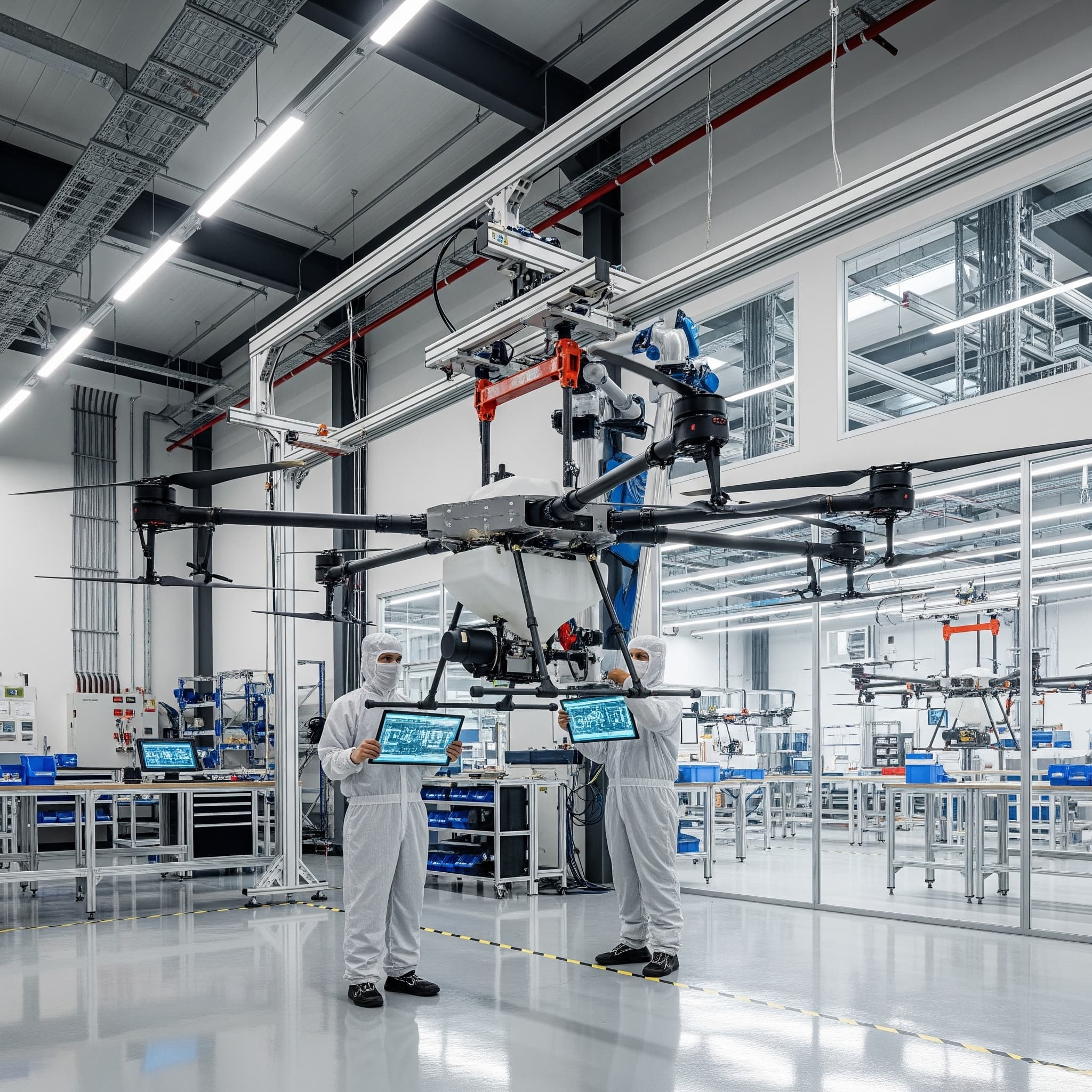
Major players like CNH Industrial launched their R4 Autonomous Robot Family and AI-driven spraying systems, while Kubota demonstrated ultra-precise weeding robots. AGCO itself introduced smart farming innovations like RowPilot and SymphonyVision for precision spraying, and the Valtra Coach Talking Tractor, an AI assistant designed to make farming more intuitive and data-driven.
Beyond agriculture, the broader manufacturing sector is seeing significant investment in smart manufacturing initiatives. 80% of executives plan to allocate 20% or more of their improvement budgets to these areas.
Agentic AI, capable of reasoning, planning, and autonomous action, is poised to revolutionize various aspects, from identifying alternative suppliers in complex supply chains to maximizing production uptime through autonomously generated reports. Furthermore, physical AI, encompassing robots with enhanced autonomy, is expected to see a more than twofold increase in adoption by 2026.
Trend 3: Hyper-Personalization through Advanced Manufacturing
The demand for highly personalized products is pushing manufacturers to adopt advanced manufacturing techniques that enable mass customization without sacrificing efficiency or cost-effectiveness.
Hyper-personalization is fueled by evolving consumer expectations and the ability of new technologies to support flexible production. This trend was already on the scene in 2025, and is projected to advance further in 2026.
In the automotive sector, for instance, the shift towards electric vehicles (EVs) is not just about powertrain changes but also about offering highly configurable options for consumers. Manufacturers are leveraging advanced robotics and AI to manage complex assembly lines that can produce a wide variety of vehicle configurations on demand.
Similarly, in aerospace, additive manufacturing (3D printing) is enabling the creation of custom features with optimized designs and reduced lead times, catering to specific performance requirements and weight reduction goals.
Role of Digital Twins in Mass Customization
This trend is underpinned by the increasing sophistication of digital twins and cyber-physical systems.
Digital twins allow for extensive simulation and optimization before physical production, facilitating rapid iteration and customization. The market for digital twins is projected to grow significantly, reaching USD 889.82 billion by 2035, with aerospace and automotive leading in adoption due to their rigorous requirements for safety and efficiency.
Trend 4: Sustainable Manufacturing for a Better Future
Sustainability is no longer a niche concern. It has become a core strategic imperative for global product leaders. The trend towards sustainable manufacturing involves adopting practices and technologies that minimize environmental impact, conserve resources, and promote circular economy principles throughout the product lifecycle.
A definitive leader in this transformation is Schneider Electric. By 2026, the company has established its Circular Excellence strategy, which has helped them move away from "take-make-waste" toward a system that prioritizes product longevity.
Through its EcoFit™ services, Schneider helps customers modernize existing industrial equipment with digital sensors rather than replacing entire systems. This structural pivot shows that circularity is a high-growth business model that reduces waste while securing supply chain resilience through material reuse.
Impact of Circular Economy Principles in 2026
Beyond energy and materials, the circular economy model emphasizes designing products for durability and reusability. This requires a fundamental shift in product design and end-of-life strategies.
Manufacturers are exploring innovative recycling technologies and developing business models that support product-as-a-service, encouraging longer product lifespans and reducing waste. The integration of IoT and AI plays a major role in tracking product features, facilitating repair, and optimizing recycling processes.
Trend 5: Enhanced Supply Chain Resilience
The disruptions experienced in recent years have highlighted the need for resilient and transparent supply chains. Complex manufacturers are investing in digital tools and strategies to mitigate risks, improve visibility, and ensure the continuous flow of materials.
Solutions that provide an adaptive product portfolio view open the door for scenario and continuous planning, which bolsters product portfolio strategy and improves the management of complex global supply chains.
Agentic AI, for example, provides enhanced visibility and agility by autonomously sensing and mitigating supply chain risks while optimizing costs. AI agents can monitor potential disruptions from trade policies or weather events, alert personnel, quantify financial and operational impacts, and recommend alternative suppliers. This proactive approach allows manufacturers to respond swiftly to unforeseen challenges and maintain operational continuity.
Furthermore, technologies like blockchain are being explored to enhance supply chain transparency, providing an immutable record of product origins and certifications. This not only builds trust with consumers but also helps manufacturers comply with increasingly stringent regulatory requirements regarding ethical sourcing and environmental impact. The goal is to create adaptive supply networks that can withstand shocks and adapt quickly to changing market conditions.
Trend 6: Strategic Product Portfolio Management Software Advancements
In 2026, strategic product portfolio management software will undergo significant advancements, becoming an even more indispensable tool for global product leaders. These advancements are driven by the need for greater agility, data-driven decision-making, and seamless integration across complex product ecosystems.
Many advanced portfolio management software companies made notable enhancements in 2025, and continue to iterate strategically into 2026. Focus is on portfolio clarity, decision quality, and execution readiness.
Strategic Product Portfolio Management Outlook in 2026
Future advancements in strategic product portfolio management software will heavily leverage AI and machine learning to provide predictive analytics, optimize resource allocation, improve capacity planning, and facilitate advanced scenario planning.
Gartner predicts that by 2028, organizations with AI-ready data foundations in their Program and Portfolio Management will achieve 70% higher AI accuracy, leading to better investment returns.
This means product portfolio views will offer more sophisticated tools for evaluating product viability and assessing the strategic fit of new product initiatives within the broader portfolio.
Integration capabilities will also be of the utmost importance, allowing the software to seamlessly connect with other enterprise systems, such as PLM, ERP, and CRM. This holistic view gives product leaders the ability to make informed decisions based on real-time data, which improves alignment of product development with market needs and financial objectives.
The focus will be on providing a single source of truth for product data, empowering cross-functional teams to collaborate effectively and accelerate time-to-market for innovative cyber-physical products.
Conclusion
The manufacturing industry in 2026 will be defined by its embrace of intelligent automation, sustainable practices, resilient supply chains, and sophisticated strategic planning. The six trends outlined in this report collectively paint a picture of an industry that is innovative and much more interconnected.
For global leaders involved in complex portfolio environments, the ability to strategically navigate these trends will be extremely important for success. Investing in advanced technologies, fostering a culture of continuous innovation, and leveraging powerful tools like strategic product portfolio management software will empower organizations to not only adapt to change but to lead the charge in shaping the future of manufacturing.
Take the Next Step
Ready to turn these 2026 trends into a structural competitive advantage? Discover how Gocious provides the clarity and alignment your product portfolio needs to thrive in sectors that require continuous innovation.
Propel yourself into the future. Browse our case studies to see how Gocious transformed rapidly growing enterprises like AGCO or contact our team to get a custom demo today.