
 By
·
6 minute read
By
·
6 minute read
The product process matrix helps manufacturing managers determine whether their product strategy supports profitable scale or limits performance. This visual representation aligns product variety and volume with the process structure that supports them. It links product characteristics to the manufacturing process used on the plant floor so leaders can evaluate how their factories handle variation, cost, and throughput.
When this alignment breaks, companies face bottlenecks, excessive changeovers, jumbled flow, and higher scrap. Capacity falls, and on-time delivery suffers. When the product process matrix is applied correctly, complexity is absorbed in the right stage, product teams estimate product progress more accurately, and capital investments generate better returns. This guide explains the matrix, why it matters, and how to use it to improve project execution performance across operations.
What is the Product Process Matrix?
The product process matrix is a strategic visual tool that connects what you build to how you build it. One axis describes product characteristics such as variety, volume, and product lifecycle patterns. The other axis captures process structures that define your operations management model. These structures include project work, job shop environments with low volume, batch production, assembly line systems, connected line flow, and continuous flow processes.
Each position on the matrix represents a relationship between process choice and product demand patterns. As organizations move from low volume and high variety to high volume and high standardization, they shift toward more specialized equipment and more automated processes. These shifts often unlock higher productivity, lower unit costs, and clearer competitive advantage.
Matrix Fundamentals: Volume, Variety, and Process Choice
Products with low volume and wide variation fit job shop process environments. These environments depend on general purpose equipment, highly skilled labor, and flexible routings. They support a narrow range of stable products, prototypes, or specialized variants.
Mid-volume product lines fit batch process structures or hybrid systems that combine flexibility with repeatability. Batch companies run work in groups to reduce setup time and changeovers while maintaining the ability to adapt.
High volume, low variety product families fit assembly line systems and continuous flow processes. These models rely on dedicated equipment, balanced stations, and consistent process steps that control variation. They often support mass production with highly automated tooling.
All About Process Choices
Design choices influence where products land on the matrix. Adding options increases variety pressure and may force a job shop stage or disconnected line flow. Standardized components and modular architecture support smoother transitions from batch to line and ultimately toward continuous manufacturing. Manufacturers that want greater flexibility use strategies like mastering modular product architecture to reduce complexity.
Portfolio leaders rarely manage only one product lifecycle stage. Multiple product families exist across several points on the matrix. Coordinating these demands portfolio-centric planning and clear visibility into process product life cycles. This type of alignment appears in many product roadmap examples for manufacturing, where organizations balance variety, cost, and capacity across regions.
How to Modernize the Matrix for Cyber-Physical Products
Modern manufacturing operations blend physical and digital requirements. Cyber-physical systems add software, electronics, and data-driven controls to traditional product lines. These layers evolve at different speeds, leading to new constraints across the production process.
The fundamental product process matrix still applies. However, process choice now includes digital tools such as digital twins, real-time analytics, plug-and-play automation, and connected supply chain systems. These tools reduce setup times, improve bottleneck identification, and support more informed predictions for hardware and software teams as products move through distinct stages.
Digital capabilities allow organizations to shift stages more deliberately. They create smoother coordination between software feature releases and hardware builds while supporting more sustainable competitive advantage.
Why the Product Process Matrix Matters to Product Leaders
Executives need a single mechanism that ties product decisions to process structure, capital planning, and operational readiness. The product process matrix provides that mechanism by showing how design choices influence manufacturing operations across the full process lifecycle.
Corporate spending in manufacturing continues to tilt toward digital investments. According to the Deloitte Insights 2025 Manufacturing Industry Outlook, technology investments reached 30 percent of operating budgets in 2024. Cloud planning, advanced analytics, and automation platforms became major contributors to ROI.
The matrix helps determine where these investments produce the strongest gains. For example:
-
Flexible cells support volatile job shop environments.
-
Advanced analytics improve continuous flow capability.
-
Changeover automation supports batch production lines.
Evidence shows that matrix-driven restructuring delivers returns. McKinsey’s 2025 Global Private Markets Report notes that companies using the matrix to reposition plants achieved stronger EBITDA and greater operational leverage.
Financial Impacts of Process Alignment
A clear product process fit improves performance across several dimensions:
-
Cost per unit and margin: High volume flow lines and assembly line processes reduce unit cost and support margin improvement.
-
Time-to-volume: Stage migrations reduce ramp times once standard work stabilizes.
-
Asset utilization: Avoids over-investing in specialized machinery for low volume demand.
-
Quality yield and risk: Continuous flow environments support consistent process control and lower scrap.
The product process matrix also enhances governance. Entry and exit criteria become more explicit, and engineering, operations, and the supply chain follow consistent process steps rather than responding in a reactive manner.
Process Stages on the Product Process Matrix
The matrix runs across four distinct stages: project work, job shop, batch, assembly line, and continuous flow. Each stage defines the production process used to support different demand patterns.
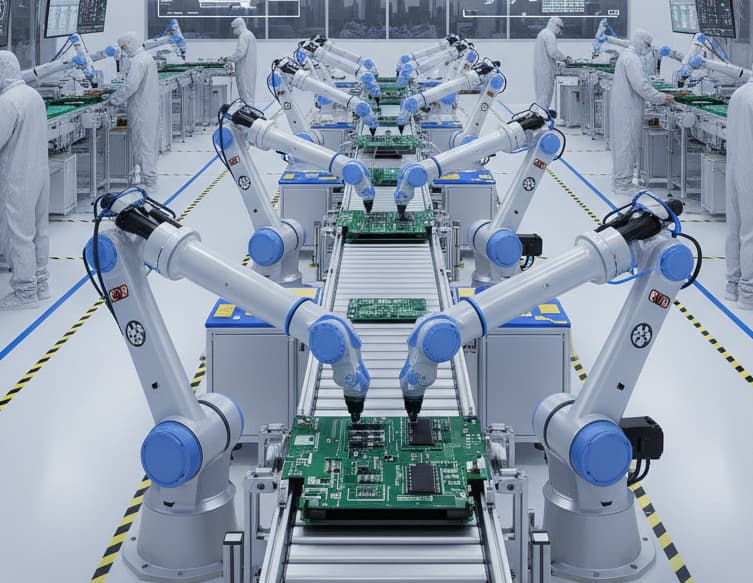
Selecting the right stage for each family builds organizational competence and supports strategic options for cost-effective growth.
Product Process Matrix Stages at a Glance
Stage choices correspond to product life cycles. Early-stage products require flexibility, while mature products benefit from more standardized operations.
Product Manufacturing
Used for unique builds or large-scale equipment. These processes rely on high-skill labor and longer process steps. They offer the maximum flexibility during uncertain requirements.
Job Shop
Supports low volume and high variation. Jumbled flow, complex routings, and frequent changeovers dominate the job shop stage. Manufacturers use this stage while products stabilize and while teams identify business opportunities and improvement opportunities.
Batch Production
Supports moderate variety and predictable schedules. Batches reduce setup times and support more cost-effective repeatability. This stage allows companies to move out of pure job shop work without full assembly line setup.
Assembly Line
Used for high volume production with a narrow range of variants. Processes become standardized, tooling becomes more specialized, and quality depends on consistent line balance. Assembly line setup becomes a key strategic tool for mass production.
Continuous Flow
Used when high volume and high standardization justify fully automated or closely controlled environments. Continuous flow processes deliver the lowest cost per unit but require stable demand and consistent process control.
Hybrid configurations appear in modern plants as well. Flexible cells next to semi-automated lines create connected line flow across multiple process product stages. These are not exceptions but strategic responses to different product requirements.
All About Design and Process Collaboration: What Product Leaders Need to Know
Modularity and standardized interfaces shorten the time needed to move a product from batch to assembly line and into continuous flow. These strategies are explored in depth in modular architecture strategies for manufacturing scale.
Stage transitions influence product management, product teams, and downstream supply chain performance. Roadmapping helps visualize dependencies and maintain clear criteria for moving toward higher volume, lower cost stages. This appears in practice throughout Gocious’ manufacturing-focused roadmap approaches.
To operationalize these transitions, teams rely on connected roadmap intelligence in tools like product roadmap software for manufacturing.
How to Put the Matrix to Work
Applying the product process matrix requires a structured approach. The goal is to create a system that supports more informed predictions, better strategic responses, and long-term competitive advantage.
Step-by-Step Implementation Process:
-
Inventory product families and demand patterns.
Group SKUs by platform and analyze volume, volatility, and variant logic to understand product progress and process constraints. -
Assess design maturity and modularity.
Review reuse levels and interface structure to determine whether product improvements support the next stage of the matrix. -
Map the current manufacturing process.
Document steps involved, changeover times, routing complexity, bottlenecks, and constraints. Look for jumbled flow and indicators of poor fit. -
Position each family on the matrix.
Evaluate the best product process stage using measurable criteria, not preference. Consider product lifecycle, cost drivers, volume stability, and process structure readiness. -
Model financial outcomes.
Include tooling, capex, labor mix, general purpose equipment, and specialized equipment to forecast ROI. -
Integrate with portfolio roadmaps and governance.
Use KPI Set Roadmaps to align design gates with process readiness and incorporate supply chain requirements.
KPI Instrumentation
A stable governance cadence maintains alignment. Reviews evaluate whether demand signals, quality data, or capacity shifts require a reassessment of stage fit. KPI instrumentation should cover:
-
Time-to-volume
-
OEE by product
-
Changeover loss
-
First pass yield
-
Cost per unit
Connected roadmap intelligence ensures that teams across regions use common definitions and templates. A manufacturing roadmap solution supports consistency across multiple sites.
Digital Enablers that Accelerate Stage Transitions
Digital tools accelerate progress along the matrix. AI-driven analytics stabilize yield earlier. Cloud planning improves responsiveness. Plug-and-play automation reduces downtime. Modern platforms increase transparency across plants and help identify bottlenecks earlier.
Survey data from the PwC Digital Trends in Operations Survey shows that companies using digital capabilities achieved better visibility and higher productivity. These capabilities should be evaluated as part of the product process stage and the investments required for each transition.
A broader perspective on digitization is outlined in the Smart Manufacturing 101 Guide.
Make the Product Process Matrix Your Operating Advantage
The original product process matrix introduced in Harvard Business Review helped companies evaluate process structure at a time when manufacturing processes were relatively static. Today’s production strategies require broader thinking. When the matrix becomes a core component of strategic planning, organizations gain visibility, identify business opportunities sooner, and maintain a more sustainable competitive advantage.
Gocious helps organizations operationalize the product process matrix using connected roadmap intelligence, KPI Set Roadmaps, and modular architecture planning. To see how these capabilities align with your production strategy and long-term goals, you can schedule a custom demo.
Frequently Asked Questions