
 By
·
6 minute read
By
·
6 minute read
Validating a product idea is one of the most important responsibilities for manufacturing leaders. The decisions made at this stage shape tooling investments, supply chain commitments, and long-term product viability.
A poorly validated concept can introduce years of complexity, unnecessary cost, and slow progress toward profitable growth. Strong product validation gives leadership reliable evidence before any large purchase orders or production changes occur and helps teams avoid the risks that come from assumptions or intuition.
Why Validation Matters for Manufacturing Portfolios
Every new concept eventually impacts engineering workflows, supplier relationships, production schedules, capacity planning, and field service. When idea validation is weak, problems appear later in the lifecycle. Common symptoms include reactive design changes, emergency retooling, unplanned supply chain adjustments, or unnecessary SKUs that complicate the product mix without delivering value.
Executive leaders face the largest risk from misallocation of capital. If an unvalidated product idea moves forward, organizations might invest in features that lack market demand or overlook operational constraints that make the idea difficult to manufacture profitably. Without a structured process for how to validate a product idea, decisions tend to favor the loudest stakeholder or the highest-profile customer rather than the best opportunity for long-term success. A disciplined structure also improves visibility into business objectives such as margin impact, capacity utilization, and payback periods.
From Intuition to Evidence-Backed Ideas
Treating product ideas as investment theses creates the accountability needed in modern manufacturing. Every idea should clearly state the market problem, the potential customers, the target audience, and the expected financial outcomes. It should also identify the value proposition and the assumptions that require testing.
As digital operations continue to improve, executives increasingly rely on data-driven visibility. For example, results from the PwC Digital Supply Chain Survey show that nearly all organizations using connected digital systems report better end-to-end transparency. This higher level of visibility strengthens market analysis and helps teams validate product ideas more consistently.
What a Product Idea Means in Manufacturing
In manufacturing, product ideas must be more detailed than early sketches or general concepts. They must define the market demand, the business idea behind the concept, and the potential advantages the company expects to create. Strong idea validation depends on understanding:
-
The pain points experienced by potential customers
-
The shortcomings of existing solutions
-
The competitive landscape
-
The target market and relevant segments
-
Operational implications for production lines and suppliers
-
Estimated pricing, volumes, and long-term product market fit
A typical product idea includes multiple potential features that span mechanical components, electronics, firmware, analytics, and service offerings. These features each come with different manufacturing and lifecycle considerations. A structured definition phase ensures the organization has enough clarity to move into market research, validate product ideas with customers, and prepare for early roadmap planning.
How Product Leaders Guide the Product Idea Lifecycle
Chief Product Officers, Product Managers, and product teams own the systems that turn raw product ideas into fully validated opportunities. Their responsibilities include shaping the idea, testing assumptions, and ensuring a clear validation process is followed. This sometimes includes user interviews, demand testing, preliminary cost modeling, or landing page experiments designed to approximate market demand before committing large resources.
Product leaders do not validate every idea directly. Instead, they establish a repeatable structure that determines who must be consulted, how evidence is gathered, how market validation is measured, and when ideas move to later stages in the validation process. Strong governance protects teams from overcommitting to unproven assumptions and gives engineers and operations teams a clear connection between early insights and downstream production decisions.
5 Best Practices to Validate a Product Idea in Manufacturing
Manufacturers benefit from a validation framework tailored to long lead times, supply chain complexity, and capital-intensive production environments. These five practices create a dependable system for idea validation across all product lines.
1. Start with a Clear Business Hypothesis
Every product idea should begin with a concise hypothesis that explains the problem, the target customers, the potential value proposition, and the expected business outcomes. A clear hypothesis prevents teams from collecting unrelated insights and allows organizations to measure progress throughout the validation process.
Teams often structure this evaluation across three categories:
-
Desirability: Whether the target audience values the solution and whether paying customers are likely to adopt it.
-
Viability: Expected revenue opportunities, margin performance, and financial feasibility.
-
Feasibility: Operational constraints, manufacturing complexity, regulatory considerations, and supply chain risks.
Comparing product ideas on these criteria helps decision-makers understand which concepts deserve investment.
2. Validate the Problem with Insights from Multiple Stakeholders
Industrial B2B markets rely on complex buying cycles that include operators, facility managers, procurement teams, and safety leaders. Validating a product idea requires feedback from all groups that influence the purchase, installation, or usage processes. This means evaluating:
-
Operator pain points
-
Maintenance demands
-
Procurement priorities
-
Regulatory expectations
-
Quality and safety risks
-
Field service challenges
User interviews, site visits, and conversations with strangers in relevant roles can reveal valuable insights and reduce the risk of optimizing for only one stakeholder group. These insights also help identify constraints that should influence future roadmap decisions.
3. Use Operational Data to Confirm Market Demand
Manufacturing organizations generate large volumes of operational data that can support the validation process. Examples include field service logs, maintenance records, ERP data, warranty claims, and production metrics. These sources help teams determine whether the problem a product idea aims to solve is broad and systemic or isolated to a few people in a small segment.
Analyzing scrap rates, downtime patterns, or common failure modes can strengthen idea validation and confirm whether there is meaningful demand. This type of market analysis also ensures the idea aligns with the competitive landscape and real operational issues that occur across the customer base.
4. Prototype, Simulate, and Pilot before Investing in Tooling
Prototypes and simulations allow teams to test new features or configurations without locking in expensive production decisions. Virtual models, early pilot builds, and low-volume production runs help validate manufacturability and customer value.
This approach provides early insight into market demand while reducing risk during later stages of the product development process.
5. Integrate Validation into Portfolio Governance
Validation should function as part of an ongoing governance system rather than an isolated activity. A stage-gate process aligned with manufacturing realities provides clarity around what evidence is required at each checkpoint. This prevents ideas from progressing before they have adequate validation.
Executive leaders also benefit from recurring portfolio reviews informed by customer feedback, predictive analytics, and competitive insights. Organizations often use data-driven insights to guide supply chain decisions. Similar practices help refine roadmaps, reduce risk, and support better long-term strategy decisions.
Turn Validated Ideas into Effective Roadmaps
Once a product idea reaches validation, organizations must break the concept into features and determine how to deliver them. Feature-level roadmaps allow cross-functional teams to plan mechanical, electrical, software, and service elements in parallel.
A dedicated manufacturing product roadmap software solution helps companies manage dependencies, track performance indicators, and tie validated insights directly to development priorities. These tools offer dynamic views that adjust as validation results change, which is essential when dealing with multiple product lines and long production cycles.
Why Feature-Level Roadmaps Reinforce Product Validation
A strong roadmap clarifies how validated ideas translate into specific features and user benefits. Teams can see which product versions support certain markets, how supply chain constraints impact planning, and how feature sets contribute to margin or throughput goals.
Research cited by HEC Paris Executive Education demonstrates how companies using AI-driven portfolio planning increase executive confidence, shorten idea-to-launch cycles, and improve ROI on new initiatives. This reinforces the importance of tightly connecting idea validation with roadmap decisions.
Gocious supports this approach by offering portfolio-centric tools that incorporate hardware, software, and service elements into a unified view. Dependency mapping helps teams identify production or engineering limitations early, while KPI Set Roadmaps connect features to measurable business outcomes.
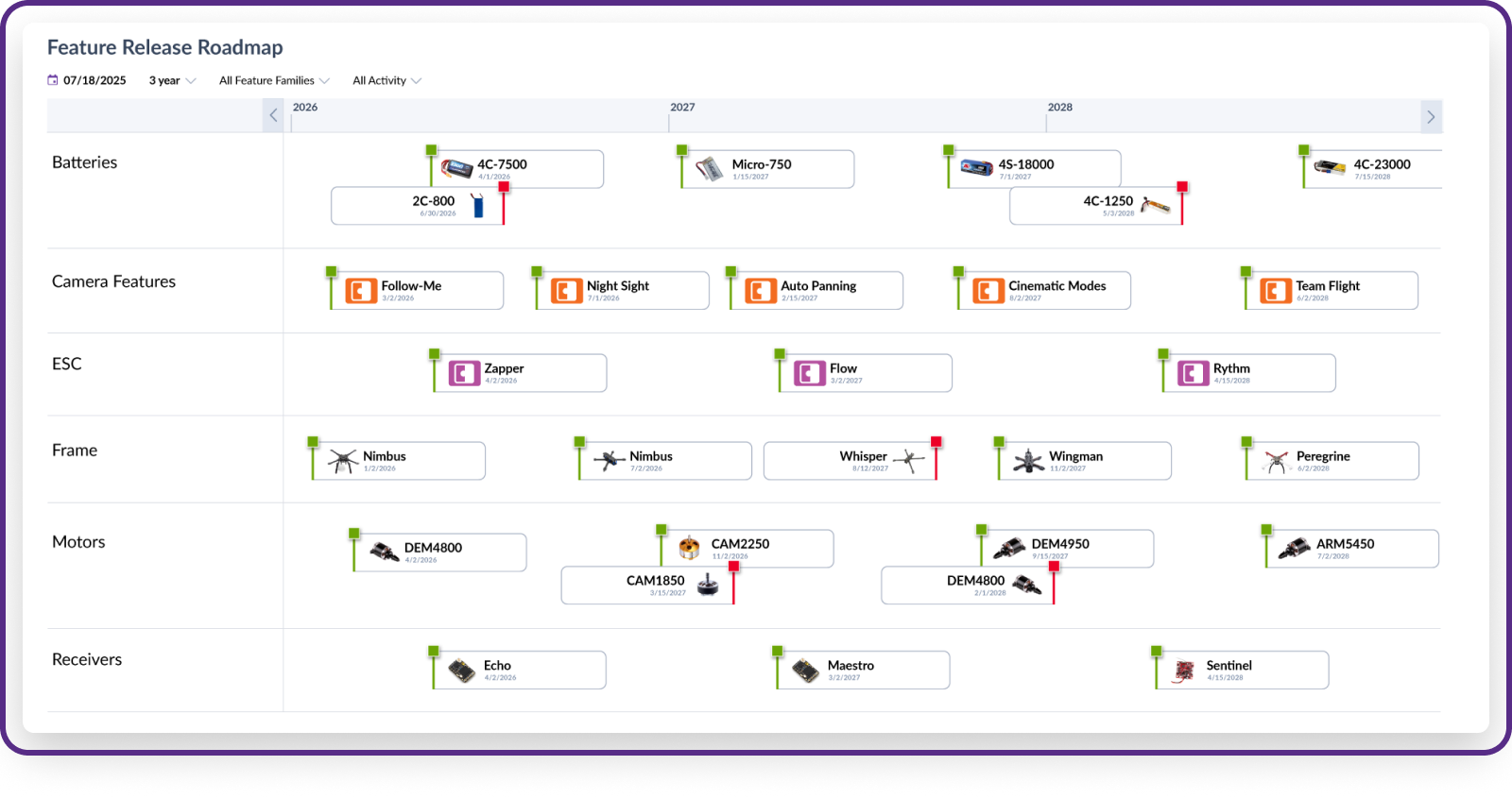
Resources such as Gocious guidance on product development milestones, the overview of clear roadmap steps, and various product roadmap examples offer additional support for turning validated ideas into practical execution plans.
Build a Reliable System for Confident Product Decisions
Knowing how to validate a product idea helps manufacturing companies protect capital while supporting long-term portfolio strategy. When teams treat ideas as investment hypotheses, test assumptions with appropriate market research, and convert findings into feature-level roadmaps, they strengthen both execution and financial performance.
A platform designed for manufacturing, such as the Gocious roadmap solution, brings validation, planning, and execution into one environment. Organizations ready to improve their validation process and reduce the risk of new product investments can explore how Gocious supports product teams throughout the full lifecycle. Schedule a demo today.
Frequently Asked Questions