
 By
·
9 minute read
By
·
9 minute read
Lifecycle planning in product portfolio management is the discipline of understanding how products, platforms, shared modules, and aging assumptions shape the decisions still ahead of you. Its purpose is to see how a single lifecycle move ripples through investment priorities, platform evolution, and the next planning cycles before any of that becomes too expensive to unwind.
Most manufacturers can tell you exactly when a product is scheduled to launch. Many can tell you when it's expected to retire.
But far fewer can tell you what either of those dates do to the rest of the portfolio.
Lifecycle planning seeks to solve this gap in data, informing product portfolio leaders about:
- Which platforms they pull forward
- Which shared modules they strand
- Which investment cases they quietly invalidate
In this guide, learn how to overcome gaps and misalignment in complex portfolio environments through lifecycle planning visibility strategies for product leaders.
Lifecycle Planning in Complex Product Portfolios: Why It Is So Important
In complex manufacturing, products don't leave when the next roadmap item arrives.
A diesel powertrain stays in production for a decade and in the field for two. It keeps generating aftermarket revenue, carries service and parts obligations long after the last unit ships, and shares controllers, valve blocks, and software stacks with three other product lines.
The retirement decision you make on one SKU reaches into commitments you made years ago and investments you haven't approved yet.
The Real Problem Is Context, Not Data
Most manufacturers aren't short on lifecycle information. They're drowning in it. The retirement dates, replacement schedules, and dependency lists exist somewhere. What's missing is a single place where all of it connects to the decisions it's supposed to inform.
Picture where that information actually lives. Product teams keep the roadmap in a deck that gets rebuilt for every steering committee, while engineering runs development plans in a different system entirely. Meanwhile, the business cases sit in finance's spreadsheets.
Platform assumptions and portfolios drift quietly. Leadership only sees it stitched together in a quarterly review; but, by then, it's already a snapshot of last month.
This is the pattern that repeats across nearly every complex manufacturer:
- Roadmaps reconciled by hand
- Product reviews that examine one initiative at a time instead of the portfolio it belongs to
- Dependencies that only surface once a timeline has already slipped
Nobody set out to create blind spots. They accumulate naturally as planning information spreads across teams and tools that were never designed to talk to each other.
Why Lifecycle Decisions Are Rarely Local
Manufacturing portfolios don't behave the way most planning frameworks assume. Products stay active for years and shared modules get reused across entire families. Service commitments outlive the engineering teams that designed the product, and software now evolves on a completely different clock than the hardware it runs on.
So a lifecycle decision almost never stops at one product.
Take a construction equipment manufacturer planning to retire an aging hydraulic control unit. The same electronically controlled valve block is used across its wheel loaders, excavators, and telehandlers. On the surface it reads as an engineering call: source a replacement, validate it, swap it in.
But it becomes a portfolio decision the moment you ask the obvious follow-ups:
- Which products in production still depend on the unit, and what's their remaining run?
- Which future programs were quietly counting on reusing it to hit their cost targets?
- Which customer fleets and service contracts assume parts availability past the retirement date?
- Which platform investments were approved on the assumption the migration had already happened?
- Which launches sit downstream of a successful replacement?
These are important product portfolio questions that get harder to answer the longer the product has been in the market.
The Four Sources of Lifecycle Exposure
Every manufacturer's situation is different, but lifecycle risk tends to come from the same four places. Tracking them separately is how teams convince themselves each one is manageable.
1. Legacy burden
Products outlive their plans. They keep drawing engineering hours, support resources, and management attention long after they've stopped being strategic. It appears as capacity that never shows up as a line item but absolutely shows up as the reason there's no room for the next bet.
2. Shared modules
Components, controllers, and software capabilities reused across multiple products create dependencies you can't evaluate one product at a time. The reuse that made the business case is the same reuse that makes the retirement decision dangerous.
3. Platform transitions
Migrating from one platform generation to the next almost never lands on the date in the plan. Suppliers slip, validation drags, a lead program pushes right. Everything sequenced behind it inherits the delay.
4. Lifecycle assumptions
Expectations about retirement timing, demand, regulatory deadlines, and technology readiness all change as the market does. The assumption is usually fine. The problem is that it changed six months before anyone planning around it found out.
Individually, any one of these looks like a contained issue. Together they shape a large share of the investment, platform, and resourcing decisions a manufacturer makes every year.
This is exactly why so many teams are investing in stronger dependency management and portfolio visibility. There is a strong need to understand how dependencies move your future decisions as conditions shift.
Lifecycle Planning Is Not Product Lifecycle Management (PLM)
A lot of the difficulty here comes from a category mix-up: lifecycle planning gets treated as something the PLM system already handles. The two are related, but they answer different questions.
PLM governs engineering reality, such as product definitions, specifications, BOMs, change control, the authoritative record of what a product is. It's essential, and lifecycle planning doesn't replace it.
How Lifecycle Planning Differs from PLM
Lifecycle planning sits a level up and asks portfolio questions instead:
- Which products should keep getting investment, and which are coasting on inertia?
- Which platforms do we carry forward, and which generation do we let go?
- Which lifecycle assumptions are quietly changing under our current plan?
- Where do dependencies create real portfolio risk?
- Which of these decisions reshapes next year's priorities?
You can have flawless engineering visibility inside PLM and still be unable to answer any of these questions.
For example, an industrial equipment maker can tell you precisely which components are changing on a given assembly down to the revision level, but still have no shared view of how those changes hit launch timing, platform strategy, or long-range service obligations.
PLM controls the engineering truth. Lifecycle planning makes the portfolio consequences of that truth visible to the people deciding where the money goes. You need both, and they are not interchangeable.
Shared Modules in Product Lifecycles: How They Turn Efficiency Into Hidden Risk
Reuse is the defining trait of complex manufacturing portfolios. One module supports a dozen products. One platform spans several families. That reuse is where the margin comes from, and it's also where the dependencies hide.
Example of Shared Module Risk: Agricultural Equipment Manufacturing
Consider an agricultural equipment manufacturer planning the next generation of its precision-ag stack: a common display, telematics controller, and software architecture shared across tractors, sprayers, and combines, sold into North America, the EU, and Brazil.
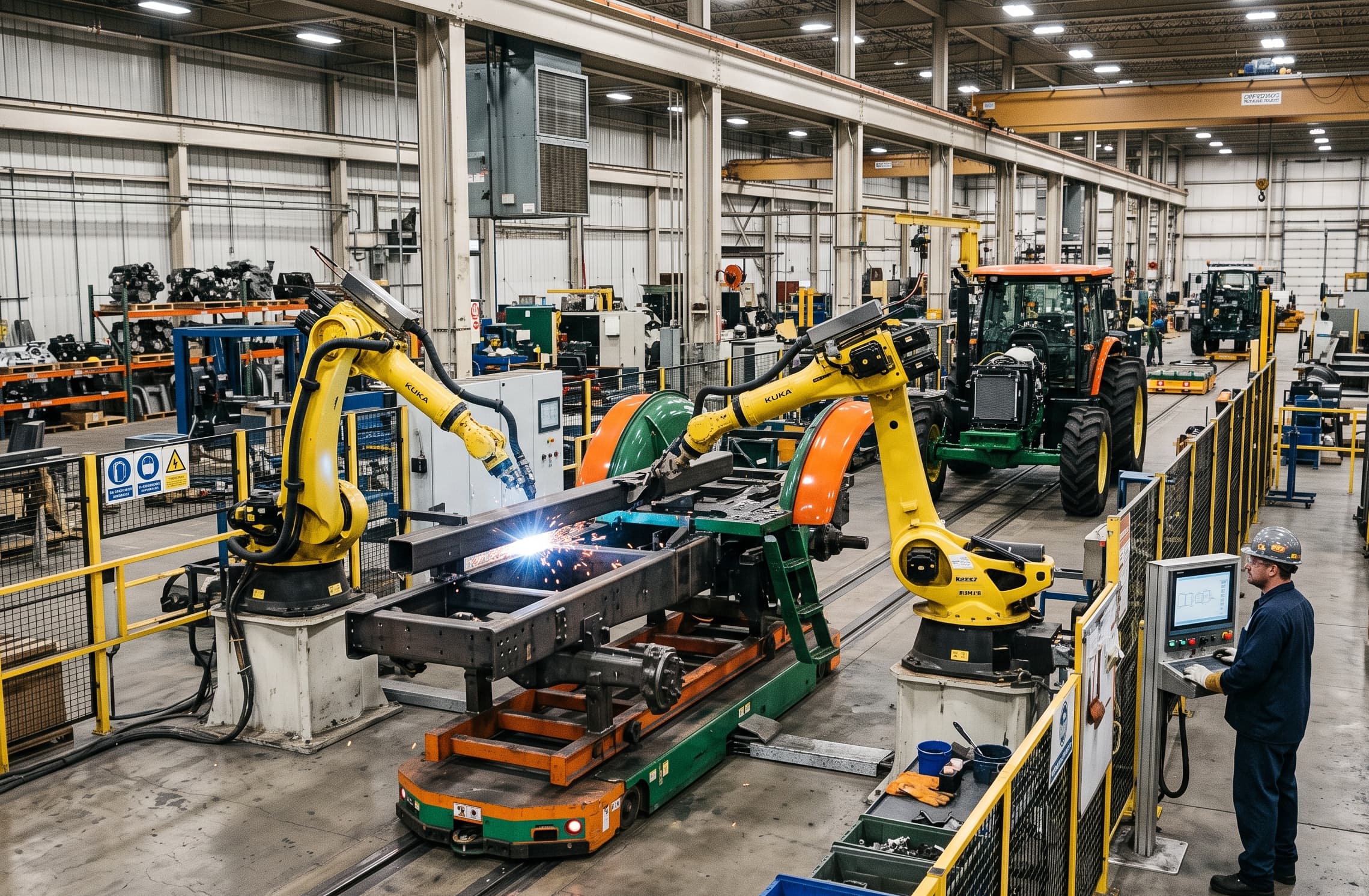
Each has its own emissions rules, connectivity requirements, and dealer support expectations.
On a slide, "refresh the aging controller" is one bullet. In reality, it touches the launch cadence of three product families, the over-the-air update commitments already made to customers, the engineering team that can only do one of these migrations at a time, and the regional certifications that don't move on the same calendar.
When that web isn't visible in one place, you get the shared module exposures nobody chose:
- Duplicate investment because two business units solved the same dependency independently
- Support obligations that get extended by default because no one priced the alternative
- Launches that slip because a shared component wasn't ready and nobody had drawn the line connecting them
Making these dependencies visible is what separates portfolios that scale reuse from portfolios that get trapped by it.
What Changes With a Portfolio View Teams Trust
The goal of better lifecycle planning isn't more reports, more spreadsheets, or another planning ritual. It's better decisions.
Decisions get better when the people making them can see, in one place, what exists today, what's planned next, which assumptions are shifting, what's being carried forward, what's nearing retirement, where the dependencies are, and where exposure is building.
That visibility changes the conversation in the room.
How Visibility Transforms Lifecycle Planning
Instead of discovering a dependency after a launch commits, product portfolio leaders can catch it while options are still open. Instead of reviewing products one at a time, leaders weigh consequences across products, platforms, modules, and investments together.
A commercial vehicle manufacturer deciding how aggressively to fund battery-electric platforms needs to see which legacy diesel platforms are still load-bearing, which customer and fleet commitments run past the planned retirement dates, which products lean on shared powertrain and telematics components, and which lifecycle assumptions carry the most risk if they're wrong.
A trusted portfolio view doesn't make that decision for them, but it certainly makes the decision honest. It's also what makes real portfolio optimization and credible scenario planning possible in the first place.
Legacy Burden: The Capacity You've Already Spent
The most underestimated input to any portfolio decision is everything you're still carrying. New products launch, but old ones rarely leave on cue. They keep earning revenue, requiring support, demanding specific regional configurations, and consuming engineering and service capacity that's now invisible because it's been baked in for years.
A commercial vehicle maker supporting three platform generations at once feels this acutely. The newest generation is the future of the business. The previous one still anchors major fleet customers under multi-year contracts. The oldest is technically obsolete but throwing off real aftermarket and parts margin.
Each generation consumes resources, creates dependencies, and lays claim to future investment. Without lifecycle visibility, leaders consistently underestimate how much of their capacity is already committed to supporting the past.
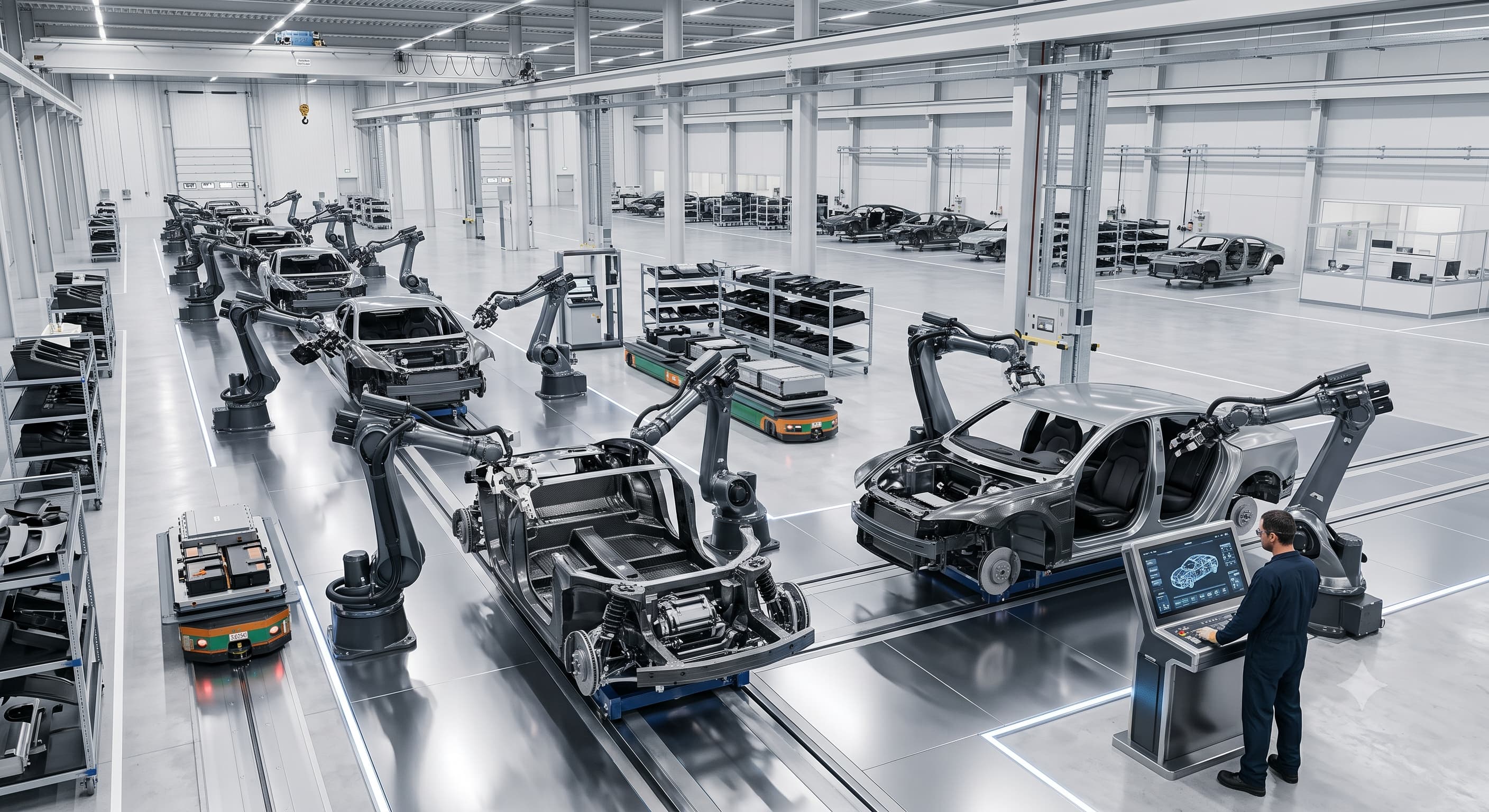
That's usually the real reason there's "no room" for the next initiative. Legacy obligations never appear in the planning conversation as the live, resource-consuming commitments they are.
Better lifecycle planning puts what you're still supporting on the same page as what you want to build, which is the only way long-range plans stay credible instead of aspirational.
Tracking Lifecycles: How to Decide What to Do
No manufacturer fixes this overnight, and the ones that make the most progress rarely start by overhauling their lifecycle process. They start by building a shared planning context, then grow into using lifecycle information as a decision-making capability. It tends to move through five stages.
Stage 1: Lifecycle tracking
The information exists, scattered across spreadsheets, decks, PLM, and review meetings. Teams burn real time validating and reconciling it. The work is documenting activity, not understanding consequences.
Stage 2: Shared planning context
Products, roadmaps, lifecycle assumptions, and priorities finally live in one understood place. Reviews get more productive because everyone is arguing from the same facts. Complexity hasn't dropped, but alignment has improved.
Stage 3: Lifecycle visibility
Teams can now see how assumptions, dependencies, and product structures move future decisions. Risk surfaces earlier, tradeoffs get easier to weigh, and the conversation shifts from reporting status to reading implications.
Stage 4: Strategic portfolio planning
Lifecycle decisions get evaluated inside broader portfolio goals. Leaders weigh tradeoffs across products, platforms, and investments together, and lifecycle planning stops being a separate exercise.
Stage 5: Scenario-based decision making
Leaders test alternative futures before committing resources. Instead of reacting to assumptions that broke, they plan for the ones most likely to. Lifecycle planning becomes a way to navigate uncertainty rather than a static timeline.
The reason the value compounds is right there in the progression: the biggest gains come after a trusted foundation exists and teams start using lifecycle information to drive decisions instead of just recording them.
Embrace Scenario Planning in Lifecycle Planning
As we’ve discussed, the catch with any lifecycle plan is that its assumptions don't hold still. A single fixed plan is the one thing you can be confident is already wrong somewhere.
So leaders need to reason in scenarios, which is where lifecycle planning, continuous planning, and scenario planning go hand-in-hand.
How Scenario Planning Fits into Product Lifecycles
Take that commercial vehicle maker retiring a core platform. In one scenario the transition lands on schedule. In another, fleet demand extends the platform's life by three years. In a third, a supplier constraint pushes migration to the replacement out indefinitely.
Each path implies a different answer on engineering allocation, capital, parts and service obligations, and downstream launch timing. Decide on the first scenario alone and you've bet the portfolio on the future being convenient.
With real lifecycle visibility, leaders can run those alternatives before committing. They can name which assumptions carry the most risk, see where dependencies turn into exposure, and choose with their eyes open even while uncertainty remains.
When it comes to scenario and continuous planning within product lifecycles, the aim is to be ready for the handful of futures most likely to actually show up.
Conclusion: Complex Product Portfolios & Lifecycle Planning
Lifecycle planning gets filed under retirement dates and replacement schedules. In complex manufacturing it carries far more weight than that, because the products themselves do:
- They stay active for years
- The platforms evolve across generations
- The modules show up in product after product
- The service obligations outlast everyone who designed them
Every lifecycle decision lands on top of that.
The manufacturers that make the most credible portfolio calls aren't the ones with the most detailed lifecycle plans. They're the ones who can see how lifecycle assumptions, dependencies, platform investments, and legacy commitments interact.
As portfolios grow more complex, the discipline shifts from managing timelines to understanding consequences before they harden into commitments you can't reverse.
Improve Product Portfolio Visibility with Gocious
Manufacturers don't need another execution system to plan lifecycles better. What's usually missing is the layer that connects lifecycle information to portfolio decisions, a place where products, platforms, modules, dependencies, business context, and lifecycle assumptions sit in one trusted product portfolio view instead of a dozen disconnected ones.
That's the layer Gocious’s strategic product portfolio management platform provides.
When a lifecycle assumption changes, leaders need to see immediately which products, platforms, modules, investments, and commitments just moved with it. This takes more than roadmap tracking.
Gocious sits above your execution and engineering systems, not in place of them, giving product and portfolio leaders one credible view that connects product structures, lifecycle assumptions, and the planning context behind them.
The result is lifecycle exposure that's visible earlier, tradeoffs that are clear enough to actually debate, and portfolio decisions that hold up as conditions change.
Want to see how Gocious can improve your product decisions? Get a custom demo.
Frequently Asked Questions