
 By
·
6 minute read
By
·
6 minute read
A marketing requirement document is often the first serious test of whether a manufacturing product concept deserves investment. In many organizations, this test is rushed or scattered across slide decks, emails, and spreadsheets. The result is product teams guessing which features matter, sales promising capabilities that do not exist, and capital locked in products that miss the target market.
For global manufacturers, a marketing requirement document (MRD) is not only a template. It is a strategic document that connects market trends, market research, and customer needs to the product development process. When the MRD is strong, it becomes a stable foundation for the product management process, product strategy, and faster, more predictable launches.
The Strategic Role of the Marketing Requirement Document in Manufacturing
A marketing requirement document defines the market problem, target customers, and business outcomes that a proposed solution must deliver. It translates external opportunity and market demands into internal commitment. In practical terms, it answers three questions before technical specifications are discussed:
-
Who is the target market and which user personas matter most?
-
What customer pain points and jobs to be done are we solving?
-
How will leadership know that the product succeeded, based on clear success metrics?
Unlike a classic business case, which focuses mostly on financials, or a product requirements document (PRD), which details functional and technical specifications, the MRD stays at the market and customer level. It concentrates on market needs, market size, segments, buying centers, and value propositions, and it outlines high level feature categories the product must support. This keeps discussions rooted in market requirements rather than individual feature requests.
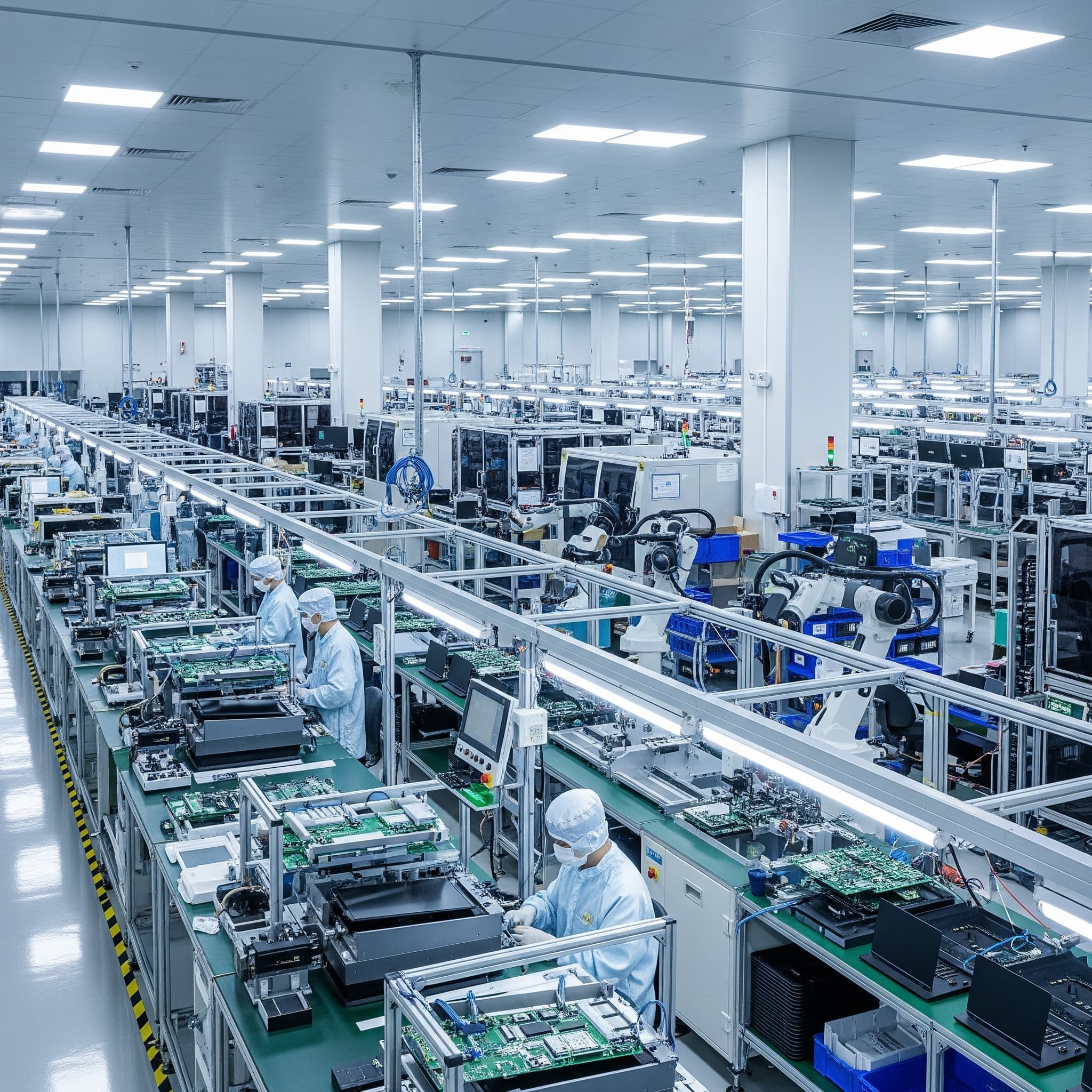
When MRDs are informal or perfunctory, documentation becomes a drag. Product teams rewrite requirements across multiple formats. Marketing teams, engineering, and operations rely on different views of the same information. The National Association of Manufacturers 2025 Manufacturing Trends Report notes that teams in large manufacturers spend a significant share of their week on documentation and data reports. That time should instead support developing solutions and software solutions that move the needle.
Core Elements Executives Should Expect in Every MRD
A practical test for leaders is simple. Could you defend the investment, describe the market opportunity, and explain the business strategy by reading only the marketing requirement document?
To meet that standard, an MRD for manufacturing should include:
-
Target markets and user personas
Geographies, verticals, and buying centers, with clear descriptions of stakeholders and user stories. -
Customer needs and customer pain points
The jobs customers are trying to do, the constraints they face, and the evolving customer needs that influence purchase decisions. -
Market requirements and market insights
A structured summary of market trends, market research, industry trends, and market gaps, showing why this opportunity matters now. -
Competitive landscape and market opportunity
How the solution will differentiate, where the market is crowded, and where there is room to win with a focused product strategy. -
Business objectives and success metrics
Revenue targets, margin expectations, attach rates, adoption goals, and customer satisfaction levels, all tied to realistic timelines. -
High level feature categories and constraints
Capabilities the product must support, without locking into detailed technical specifications too early. Constraints might include price bands, lifecycle expectations, regulatory requirements, and platform boundaries.
For manufacturers, MRDs also need to recognize regional variants and regulatory differences. Early planning stages should include localization assumptions, serviceability expectations, and the interplay between hardware and digital components. This is where informed decisions about scope and complexity begin.
From MRD to PRD and Product Roadmap
A marketing requirement document only creates value when it feeds directly into the PRD and the product roadmap. In a mature product management process, these artifacts form a simple cascade:
-
The MRD explains why the product matters, for whom, and in what context.
-
The PRD translates the MRD into concrete product requirements and technical behavior.
-
The product roadmap sequences work across multiple products and releases.
When this chain holds, each document gets leaner. The MRD does not drift into the PRD, the PRD does not renegotiate the market opportunity, and the roadmap stays grounded in realistic capacity rather than wish lists.
Research on team focused transformation shows what this looks like in practice. One industrial manufacturer embedded marketing teams and product strategy leaders directly into agile squads. Those squads jointly owned the MRD, PRD, and roadmap, which improved collaboration and reduced time from concept to launch.
A similar pattern appears at Siemens Digital Industries. As highlighted in McKinsey Technology Insights on top tech trends, Siemens adopted a rigorously structured MRD that combined persona work, business analysis, and AI supported analytics before crafting detailed specifications. This approach, connected to agile product roadmaps, contributed to shorter development cycles and better post-launch outcomes.
In fast moving segments such as automotive manufacturing, a portfolio wide approach to bridging the gap between market demands and product strategy depends on MRDs that clearly state which regions, segments, and use cases matter most. This helps product managers coordinate roadmaps without overwhelming the development team or factory operations.
How to Use MRDs and Roadmaps to Compress Time to Market
Time to market is not only a schedule metric. It shapes pricing power, share of wallet with OEM customers, and the utilization of expensive production assets. A robust marketing requirement document that flows into a realistic roadmap is one of the few levers that improves both speed and product market fit.
When MRDs are vague, roadmaps tend to accumulate features requested by many stakeholders. That creates an unhealthy team effort where everything feels important and nothing gets prioritized. Engineering and operations then face late changes that affect tooling, supplier contracts, software releases, and quality checks.
By contrast, an MRD that anchors customer expectations, market needs, and clear scope allows product leaders to define a minimum viable release and follow on phases. It sets realistic expectations about what will ship first and how subsequent iterations address additional user stories and use cases.
Roadmap Practices That Turn MRDs into Faster Launches
To turn marketing requirement documents into real acceleration, manufacturers benefit from a few key roadmap practices:
-
Theme based planning
Structure the roadmap around themes that come directly from MRD content such as “connected services for mid market OEMs” or “safety upgrades for specific regional variants.” -
Cross functional visibility
Make sure hardware, firmware, and digital components are visible in one environment so the development team can coordinate across products and plants. -
Dependency mapping and portfolio views
Use tools that provide portfolio views and dependency mapping to see how initiatives interact, especially when multiple lines share a platform.
Purpose built product roadmap software for manufacturing simplifies this work. Gocious, for example, helps product managers connect MRDs to roadmaps, backlogs, and performance dashboards. That connection supports modular strategies and gives leadership clear visibility into how product lines evolve.
Modularity is particularly effective when it appears early in the MRD. If the marketing requirement document states an intent to build modular platforms with region-specific variations, roadmaps can emphasize reusable components and shared architectures. Guidance on mastering modular product architecture to accelerate innovation and scale in manufacturing shows how this approach reduces complexity, shortens changeovers, and simplifies lifecycle management.
The documentation layer itself is changing as well. Many manufacturers are using digital tools and business intelligence platforms to automate parts of technical and marketing documentation. That evolution turns MRDs into searchable, analytics-ready assets rather than static files.
Governance, Metrics, and Continuous Improvement for MRDs
For large manufacturers, the marketing requirement document should not be a one-time exercise. It needs governance that treats it as a living artifact:
-
Clear ownership by the product manager and product team
-
Defined review cadences at each stage gate
-
Explicit rules for how changes flow into the PRD and roadmap
-
Traceability between global MRDs and regional adaptations
Bosch Rexroth’s industrial automation division provides a useful example. As described in Deloitte’s technology industry outlook, the division implemented a standardized MRD template with mandatory sections for market opportunity, customer interviews, business KPIs, and success metrics. The MRD became a prerequisite for later gates. This structure led to faster development cycles and a higher rate of first-time-right product launches.
To measure the impact of better MRDs, executives can track:
-
Time from MRD approval to first customer shipment
-
Percentage of requirements that change after development begins
-
Engineering and operations rework attributable to unclear market requirements
-
Roadmap predictability at the portfolio level
-
Launch performance against the MRD’s success metrics
These metrics form a feedback loop. Over time, they highlight which practices improve alignment with evolving customer expectations and which need refinement.
Typical MRD Pitfalls in Manufacturing Organizations
Even experienced organizations make similar mistakes with MRDs:
-
Treating the MRD as a feature catalog instead of a market-level narrative
-
Ignoring the input of regional sales, service, and marketing teams
-
Failing to link MRDs to PRDs, roadmaps, and PLM systems
-
Leaving out serviceability, testability, and retrofit needs that affect the factory
-
Letting MRDs sit in static files that nobody revisits after the project kickoff
The remedy is simple, but it requires discipline. Keep the MRD focused on customer needs, market requirements, and business objectives. Involve stakeholders from across the value chain. Connect the document to the tools that the development team and operations use every day.
How to Make Your Marketing Requirement Document Advantageous
For modern manufacturers, the marketing requirement document is the bridge between market reality and complex cyber-physical products. When MRDs are rigorous, governed, and connected to PRDs and portfolio roadmaps, they reduce waste, improve time to market, and give leaders a clear view of how each initiative supports long term business strategy.
Reaching that level means investing in templates, governance, and a shared environment where MRDs, roadmaps, and backlogs stay in sync. Gocious is built to support that kind of team-focused environment for marketing teams, product managers, and engineering leaders. If you are ready to strengthen your marketing requirement document practice and move from scattered documents to a unified platform, you can schedule a custom demo with Gocious.