
 By
·
10 minute read
By
·
10 minute read
As a product leader, you have to constantly navigate volatile markets and fragile supply chains. Luckily, scenario planning helps de-risk your long-term product roadmap while maintaining the agility to pivot. Oftentimes, it helps to see real world scenario planning examples so you can explore multiple futures before committing to expensive and hard-to-reverse decisions.
In this guide, you’ll learn what scenario planning is, how it differs from traditional forecasting, and how it benefits product leaders specifically. Then we’ll walk through industry-specific scenario planning examples in automotive, tech, manufacturing, and healthcare, before closing with a practical roadmap for turning scenarios into strategic product decisions.
Executive Summary
- Scenario planning moves beyond static forecasting by modeling multiple plausible futures, allowing leaders to stress-test product portfolios against volatile markets and supply chains.
- For hardware-software systems, scenario planning aligns varying development cadences, ensuring that shifts in components (like semiconductors) don't derail firmware or cloud service rollouts.
- Product leaders should envision a select few objectives or constraints that can materialize in the future and create a roadmap (known as a basket of new or ongoing initiatives). These initiatives maximize the chances of achieving new objectives under those new constraints. Maintain the proper resources to execute key initiatives and steer clear from lower priority initiatives.
- VPs can shift from defensive explaining to proactive leadership by making uncertainty explicit. Present data-backed contingency plans for various market shifts and regulatory changes.
Scenario Planning Fundamentals for Product Leaders
Scenario planning is a structured way to explore several plausible futures so you can see how your product strategy holds up under each one.
Think of it this way: Instead of asking, “What do we think will happen?” you deliberately ask, “What could happen, and how would our portfolio perform if it did?”
Let’s discuss how scenario planning works as a product strategy.
What is Scenario Planning in Practice?
Scenario planning starts by identifying a small set of uncertainties that drive your outcomes. Consider it a form of risk assessment for product management. These may include demand, feature availability, regulatory change, technology shifts, product vulnerability, or pricing pressure.
Once you highlight your primary uncertainties, you then build a handful of coherent scenarios by combining different values for those drivers into futures that are internally consistent.
Narratives and Numericals in Scenario Planning Examples
Each scenario is described both narratively and numerically.
- Narratives capture how customers, competitors, and regulators behave in that world
- Numbers translate those narratives into estimates for volumes, mix, costs, and timing so you can plug them into your financial and product models
For product organizations, the result is not a speculative story, but a decision tool.
Global product leaders can stress-test launches, feature sets, platform choices, and regional variants against multiple futures and decide which plans are strong, which require contingencies, and which only make sense if a specific scenario materializes.
Scenario Planning vs Forecasting and Budgeting
Scenario planning is often confused with forecasting or budgeting, but they serve different purposes and work best together. Let’s break it down.
On one hand, forecasts estimate the most likely path. Meanwhile, budgets allocate resources assuming that path holds.
Scenario planning asks what you will do if reality diverges sharply from that plan.
|
Practice |
Primary purpose |
Time horizon |
Key questions |
Typical output |
|
Scenario planning |
Prepare for multiple plausible futures |
Multi-year, often 3–10 years |
What could happen, and how resilient is our product portfolio? |
Set of 3–5 futures with narratives, assumptions, and strategic responses |
|
Forecasting |
Estimate the most likely outcome |
Quarterly to 3 years |
What is our expected demand, revenue, and cost trend? |
Single baseline projection with ranges or confidence intervals |
|
Budgeting |
Allocate resources and targets |
Usually 1 year |
How much can each team spend or commit to deliver? |
Approved spend, headcount, and target metrics per function |
|
Sensitivity analysis |
Test impact of changing one or two variables |
Same as forecast horizon |
What happens if a single driver moves up or down? |
Range of outcomes around a base case |
|
Business continuity planning |
Respond to acute disruptions |
Days to months |
How do we operate if a major disruption occurs? |
Emergency procedures, backup sites, and recovery plans |
Scenario planning becomes especially powerful when its outputs feed directly into your adaptive product roadmaps and capacity planning, rather than sitting in a slide deck disconnected from execution.
How Scenario Planning Benefits Product Leaders
Global Directors and VPs of Product sit at the high-stakes intersection of strategy, engineering, and finance. You manage more than just features. You oversee a portfolio of investments. Scenario planning brings rigor to these choices by transforming "what-if" anxieties into structured, actionable models.
1. Increase Portfolio Resilience
Traditional product planning often relies on a single-point-of-failure forecast like a static slide deck built on the assumption that everything goes right.
Scenario planning allows you to build resilient portfolios that thrive under different market conditions. Instead of a single path, you develop a multi-path strategy that accounts for fluctuating R&D costs and shifting consumer demands.
2. Align Cyber-Physical Complexity
For leaders managing cyber-physical systems, the biggest risk is the integration gap. Hardware, embedded software, and cloud services move at different speeds. Scenario planning allows you to map dependencies across these varying lifecycles.
Adaptive roadmaps that connect hardware and software integrations are a huge advantage during this point of your product planning process.
The main benefit? If a critical semiconductor lead time doubles in one scenario, you’ve already modeled how that shifts your firmware release and cloud service rollout. This prevents a total standstill.
3. Make Strategic Decisions at the Board Level
When a VP of Product presents to the C-suite or Board, the most common question is: "What happens if this [risk] happens?" Scenario planning provides the data-backed confidence to answer.
When you make uncertainty explicit from the beginning, you can confidently present a contingency plan for various market shifts. This moves the conversation from defensive explaining to proactive leadership.
4. Optimize Capital Allocation
Every product decision is a resource trade-off. Scenario planning helps you with investments that add value regardless of which future unfolds and big bets that require specific market triggers. This ensures that even in a volatile global economy, your budget is always flowing toward the highest-probability outcomes.
Scenario Planning Examples by Industry
With the fundamentals in place, it is helpful to look at concrete scenario planning examples across industries. The basic method stays the same, but the drivers, metrics, global manufacturing vulnerabilities, and decision points change depending on whether you are shipping cars, software, equipment, or healthcare services.
Automotive Scenario Planning Examples for EV, Supply Chain, and M&A
Automotive product leaders are juggling the shift to electric vehicles, tightening emissions standards, and supply chain fragility around chips and batteries. Scenario planning helps them understand how these forces interact so they can prioritize platforms, features, and investments in a coherent way.
One recent PwC US automotive deals outlook describes how US automotive suppliers used AI-driven scenario planning to evaluate multiple M&A, divestiture, and vertical-integration options in response to inflation, tariffs, and higher financing costs.

By testing different portfolio moves against a range of market futures, the sector achieved 150% growth in deal value in Q3 2025 and maintained a stable-to-rising M&A outlook for 2026 despite cost pressures.
EV Scenario Planning Example
At the product level, imagine a three-year planning horizon for a new EV platform. You might define:
- A base scenario where EV adoption grows steadily and battery cell supply is constrained but manageable.
- An upside scenario where policy support accelerates EV demand and you must rapidly expand capacity and variants.
- A downside scenario where adoption slows, but stricter emissions rules still force more efficient internal-combustion offerings.
To maintain strategic alignment during market volatility, roadmaps must be treated as flexible portfolios rather than fixed commitments. Scenario analysis allows us to proactively identify when to throttle back current initiatives or pivot our investment mix in response to budget variances or shifting electrification targets.
When product leaders anchor each scenario in operational capacity, it ensures that prioritization is never theoretical. This approach provides the clarity needed to balance parallel workstreams and focus resources on the highest-value outcomes.
Teams exploring how software can help automotive companies improve their product roadmap strategy can feed these scenario outputs into connected roadmaps that align hardware, software, and service updates.
Tech Scenario Planning Examples for Platforms and Pricing
In technology and software, the biggest uncertainties often involve:
- Market growth
- Platform shifts
- Regulatory changes around data and AI
Therefore, scenario planning examples in this space focus heavily on subscription revenue, infrastructure costs, and customer lifetime value.
SaaS Platform Scenario Planning Example
Consider a SaaS platform planning the next three years of roadmap and infrastructure investments.
You might define three scenarios for annual recurring revenue growth driven by AI-powered features: a conservative 5% uplift, a moderate 15% uplift, and an aggressive 30% uplift. Each scenario implies different needs for cloud capacity, support staffing, and go-to-market investment.
Under the conservative scenario, your product roadmap might prioritize reliability and selective AI features focused on high-value segments. In the aggressive scenario, you could justify fast-tracking a new AI-native module, expanding regional data centers, and deepening Open API integrations so partners can build on your platform.
Manufacturing Scenario Planning Examples
Here’s a common truth: Manufacturers face overlapping uncertainties around raw material costs, energy prices, trade rules, and sustainability regulations.
With that being said, scenario planning examples in this sector increasingly focus largely on future-proofing product portfolios against environmental and regulatory shocks.
Unilever’s Innovative Approach to Scenario Planning
A well-documented case involves Unilever, which used scenario planning to make its innovation pipeline more resilient to climate and regulatory uncertainty. Unilever built 2×2 scenario matrices combining environmental and regulatory extremes, then stress-tested its product roadmaps under each quadrant. This helped accelerate sustainability-aligned launches and strengthen portfolio resilience.
To make this concrete, imagine a manufacturer evaluating packaging options for a global product line. One scenario assumes moderate carbon taxes and voluntary recycling schemes. Another assumes strict extended producer responsibility laws and high landfill fees.
Under the stricter scenario, the business case for investing in recyclable, lightweight materials improves substantially, even if short-term costs rise.
Scenario planning also clarifies regional differences. A broader view of manufacturing planning by industry automotive, industrial, and medical shows how drivers such as regulatory approval cycles and customization requirements vary by segment.
Feeding these into your scenarios leads to more realistic assumptions about lead times, variant complexity, and the payoff from modular architecture.
Healthcare Scenario Planning Examples for Demand and Care Models
Healthcare organizations operate under tight capacity constraints and complex reimbursement models. Scenario planning examples here tend to center on patient volumes, payer mix, staffing, and capital-intensive equipment investments.
Consider a regional hospital system planning the next three years of service-line expansion. It could define:
- A baseline scenario with stable inpatient volumes and modest telehealth usage.
- An upside scenario where chronic-care telehealth adoption surges, reducing inpatient stays but increasing virtual visits.
- A downside scenario with periodic infection waves, spiking ICU demand and straining staff capacity.
Under the upside scenario, the system might prioritize investments in remote monitoring, home diagnostics, and digital front doors over additional inpatient beds. Meanwhile, under the downside scenario, it might fast-track ICU expansion, cross-training, and contingency staffing plans.
In both cases, product and service decisions are tied to explicit assumptions about bed occupancy and reimbursement rates.
Medical Device Manufacturing Example
Medical device and equipment manufacturers serving these providers face parallel uncertainties.
They must balance long development cycles, evolving clinical standards, and regulatory scrutiny when deciding which platforms to advance. Guidance on supporting innovation in medical equipment manufacturing with strategic product planning shows how scenario planning can align clinical validation, regulatory milestones, and commercial launches across markets.
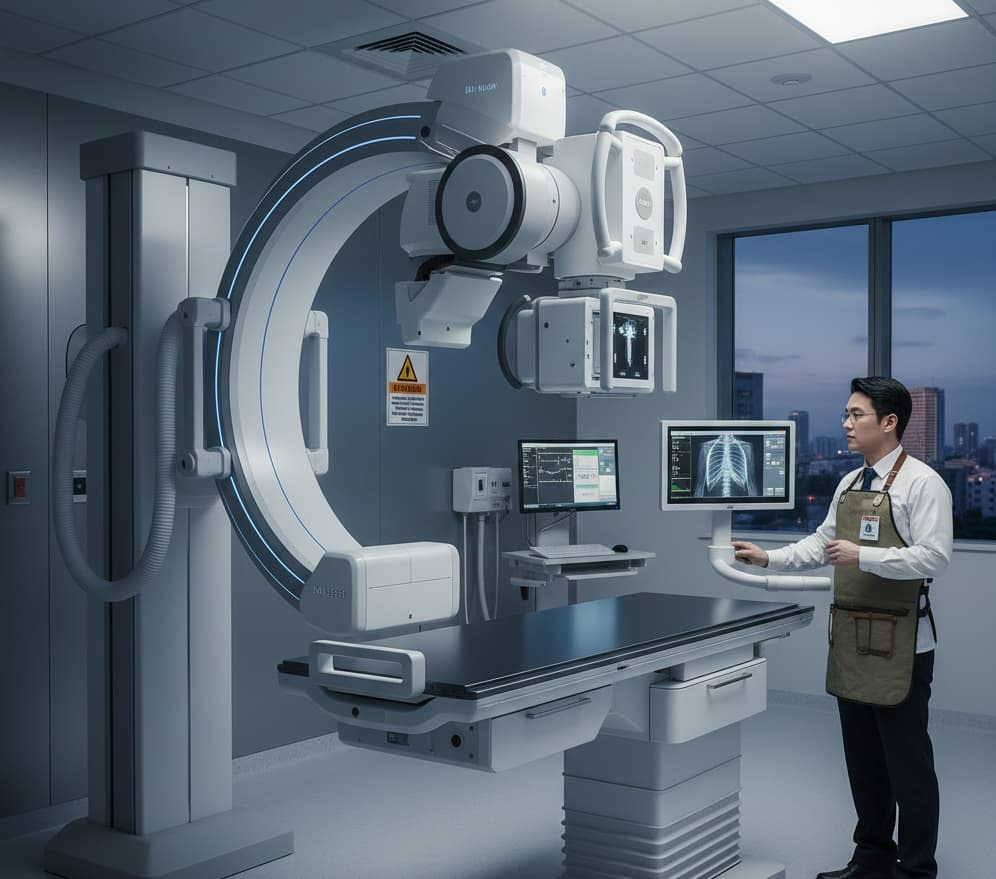
The good news? Scenario planning transforms the manufacturer-provider relationship from a transactional one into a strategic partnership. Instead of facing inevitable hardware obsolescence, both parties can align on modular platforms designed for longevity.
Ultimately, this allows for incremental software and accessory-based upgrades, which protects the provider’s capital investment while allowing the manufacturer to stay integrated into the care delivery chain.
How to Connect Scenarios to Your Product Roadmap
Scenario planning only creates value when it is tightly integrated with how you design and manage your product roadmap.
This is where connected roadmap intelligence becomes critical. Product organizations need a single place where they can link scenarios to product roadmaps so they can visualize dependencies across cyber-physical systems and see how changes to one product cascade through shared features and platforms.
This is where a strategic product portfolio management platform like Gocious makes a world of difference. Through software like Gocious, you can tie scenarios to adaptive roadmaps, allowing you to incrementally pivot your global strategy when market conditions shift.
Step-by-Step Integration of Scenario Planning Examples into Roadmaps
To embed these scenario planning examples into your day-to-day product management, you can follow a straightforward sequence:
- Inventory your critical drivers: For each portfolio, list the 5–10 external and internal drivers that most influence success (demand, regulation, technology readiness, and strategic priorities).
- Define 3–5 coherent scenarios: Combine different driver assumptions into a small set of plausible futures. Avoid creating so many scenarios that no one remembers them.
- Quantify key metrics: For each scenario, estimate volumes, mix, margins, and timing at a level that lets you compare scenarios meaningfully, even if numbers are approximate.
- Map scenarios onto your roadmap: Attach scenario labels to epics, releases, or platform decisions. For example, a new variant might be “only launched in Scenario B or C.”
- Select the basket of initiatives: Prioritize the basket of new initiatives you want to introduce and any adjustments you want to make on last year's submitted roadmap. This is called Adaptive management, where leaders look at last year’s performance and see what needs to change based on the new reality or changing market and business conditions.
- Link to KPIs and stage gates: Create KPI Set Roadmaps that specify which indicators trigger a shift from one scenario path to another, and embed these as criteria in your stage-gate processes.
- Review and refresh regularly: Revisit your scenarios on a fixed cadence, often quarterly for operational drivers and annually for structural shifts, to keep assumptions current without constant churn.
Portfolio roadmapping platforms purpose-built for manufacturing, such as Gocious, are designed around these needs. They help teams manage roadmaps, visualize dependency mapping across complex product families, and connect scenario assumptions directly to cyber-physical features and regional variants.
Move from Static Plans to Scenario-Ready Adaptive Product Roadmaps
The scenario planning examples across automotive, tech, manufacturing, and healthcare all point to the same conclusion: organizations that rehearse multiple futures in advance can move faster and with more confidence when the unexpected happens.
Instead of scrambling to react, product leaders already know which roadmap path to follow under each unfolding scenario.
To put this into practice, start small: pick one portfolio, define a handful of high-impact drivers, and build three clear scenarios with linked roadmap implications.
As your teams get comfortable, expand scenario planning across more product lines and regions, and connect it tightly to your KPI frameworks and investment reviews.
If you are ready to put these scenario planning examples in a portfolio-centric roadmap platform tailored to manufacturing, you can request a custom demo with our team at Gocious.
Frequently Asked Questions