
24 months before launch
Market demand shifts. Leaders can examine the product mix before major commitments are made.
Decision lag in manufacturing
What becomes harder to change while teams work out the portfolio impact?
Supplier commitments and launch plans keep moving while teams assemble the picture. Gocious connects product plans and business context so leaders can evaluate a market or technology change while meaningful options remain.
Market demand shifts. Leaders can examine the product mix before major commitments are made.
If the decision waits, supplier agreements and tooling may already constrain the response.
The products reaching the market may deliver less value than originally expected.
Decision lag is the delay between a meaningful change and having enough portfolio context to decide how to respond.
See the scope beyond the team that first identified the change.
Examine the business assumptions and contributions behind affected plans.
Understand what becomes harder to change while the decision waits.
Modules and platforms connect many product lines. Teams may respond locally before the wider portfolio implications are clear.
Long product lifecycles, hardware and software timing, and regional variation make affected plans harder to reconcile.
Supplier agreements, tooling, and launch commitments continue while context catches up, narrowing the eventual response.
Two illustrative situations
Several commercial vehicle families depend on the same controller. Its revised timing affects their adoption plans.
DelayTeams reconcile the affected launches while a region commits to the original availability date.
ConsequenceThe eventual response must account for a customer commitment that did not exist when the change first emerged.
A vehicle manufacturer’s electric-only plan faces weaker demand in a key market, where customers favor hybrids.
DelayLeaders assess the product mix and business estimates while supplier and tooling commitments continue against the original plan.
ConsequenceAdjusting the mix later may add cost, disrupt launch timing, or leave products less aligned with market demand.
Hypothetical examples, not customer results or claims about current market conditions.
Reduce time spent reconstructing context so leaders can review launch options, market needs, and expected returns before further commitments narrow the response.
Gocious is a strategic product portfolio planning platform for complex manufacturers. Its product portfolio visibility software connects plans with the context leaders need to review a meaningful change.
Start with a market assumption, shared technology, or portfolio commitment that deserves review.
Review connected product lines, roadmaps, regional plans, and relevant business estimates.
Use that context to assess the response before further commitments narrow the available choices.
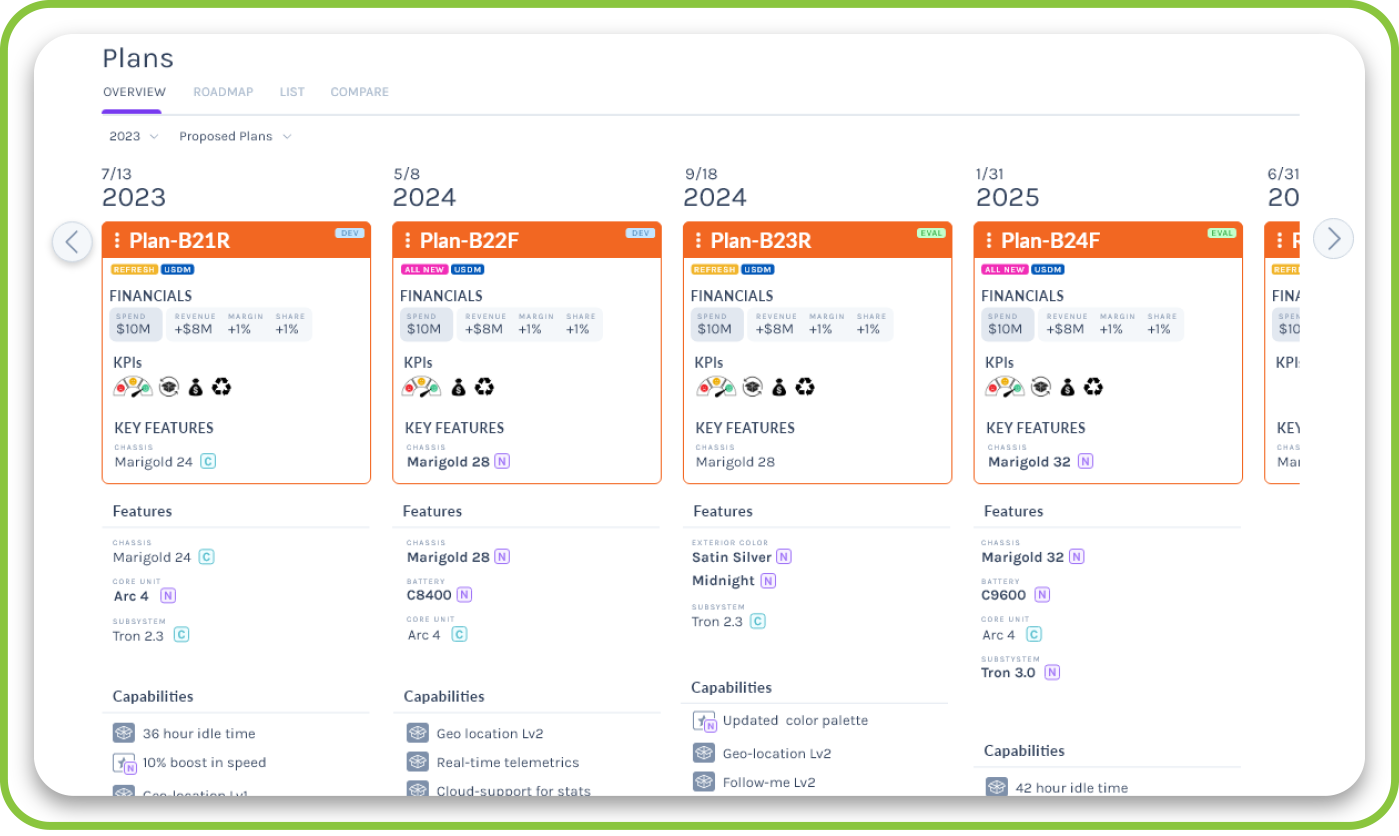
Gocious supports planning alongside engineering, financial, and execution systems. External updates depend on configured integrations. Leaders assess the implications and make the decisions.
Explore related questions: One Trusted Portfolio View · Portfolio Drift · Lifecycle and Dependency Risk
Assess which launch plans, product choices, and expected contributions need review.
Understand which product families rely on a technology and what changed timing means for its adoption.
Examine whether the planned product mix and availability still address market needs.
Evaluate whether a material change warrants different priorities or investment direction.
Coordinate planning updates and prepare the connected picture leaders use to evaluate the decision.
No. Leaders may be ready to act once the relevant context is available. Decision lag often develops earlier, while teams determine which product plans are affected, what the change means for expected outcomes, and which commitments constrain a response.
Material market or technology changes can affect many product lines, regions, and shared platforms. Decision lag grows when teams must manually reconcile those plans and business assumptions while supplier, tooling, and launch commitments continue.
No. Routine local changes may not require a portfolio decision. The goal is to recognize changes that materially affect product direction, expected business outcomes, or commitments while there is still time to evaluate a response.
Gocious connects product plans, roadmaps, shared technologies, lifecycle assumptions, regions, and relevant business context. Leaders can examine affected plans and expected contributions with less manual reconstruction, supporting timely review. Gocious does not automate investment judgment or guarantee launch and financial outcomes.
Bring one material market or technology change. See how Gocious connects the affected plans and business context so you can evaluate the decision while meaningful options remain.