
Trace the Dependency
Identify the products that depend on the changed module, platform, technology, or software release.
Product dependencies · Execution change · Product-line performance
When a milestone slips or funding changes, which product plans and expected outcomes need another decision?
Gocious connects the change to related products, shared modules, and performance assumptions so leaders can decide what to protect, resequence, or reconsider.
When a milestone moves
Illustrative planning assumptions, all else equal—not customer results, a forecast, guaranteed outcomes, or a product screenshot.
A delayed module or unfunded adoption can shift a launch and its expected product-line contribution.
Review connected roadmaps and dependencies as execution conditions change.
Where configured, execution updates feed relevant planning milestones. Connections and update behavior depend on the implementation.
From execution change to product-line decision
Which plans are affected, what outcome is at stake, and how should the shared plan change?
Identify the products that depend on the changed module, platform, technology, or software release.
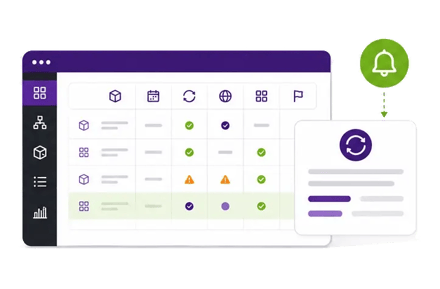
Examine the timing, funding, and expected contribution tied to the changed milestone.
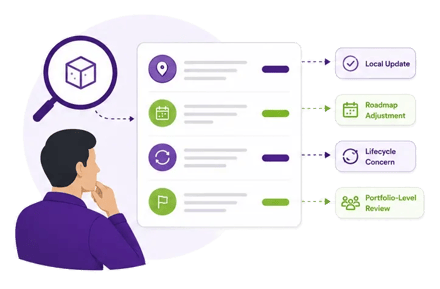
Evaluate what to protect, resequence, or defer, then update the shared plan with the decision and its expected consequence.
Illustrative manufacturing example
What if the technology is ready, but the first adoption loses funding? Two other equipment platforms still depend on the planned controller rollout. Leaders need to compare three responses.
Seek renewed funding for the first product’s adoption.
Tradeoff: preserving the sequence may displace another investment.
Maintain rollout progress if engineering and factory readiness allow.
Tradeoff: another product takes the first-adoption role and its readiness demands.
Reduce near-term spending on the affected product.
Tradeoff: delay the capability and its expected contribution.
Illustrative options to evaluate—not automatic recommendations. Validate feasibility and update affected launch and performance assumptions.
Why does change travel differently in manufacturing? Shared modules, adoption funding, and regional timing can link several product commitments to one change.
See which product adoptions depend on the same module and where the rollout has gaps.
See when an unfunded or rejected product plan puts a broader technology rollout at risk.
Review release timing and compatibility assumptions behind planned capabilities.
Connect regional and variant timing to the broader product-line commitments.
Review expected contributions and assumptions before moving or protecting a plan.
Dependency and change-impact visibility
If a planned launch or capability contributes to an expected outcome, moving that milestone can change when the contribution is expected. Gocious keeps supported milestones, dependencies, and performance context connected so leaders can review the assumptions and evaluate a response.
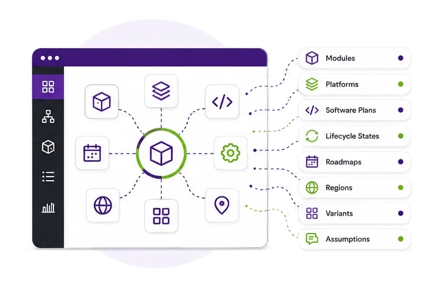
It is the ability to see how products, modules, platforms, software plans, product lifecycle states, roadmaps, regions, variants, and assumptions are connected so product leaders can evaluate which plans may need review when something changes.
Gocious brings related planning objects into connected views. Product leaders can review the products, modules, roadmap items, product lifecycle states, regions, variants, and assumptions associated with a change, then determine which plans require attention.
Gocious can surface configured planning relationships and receive supported execution updates. It does not independently determine every business consequence or choose a response. Product and portfolio leaders validate the assumptions, assess materiality, and decide what action to take.
Gocious supports planning relationships across products, product lines, platforms, modules, subsystems, hardware and software plans, product lifecycle states, regions, variants, model years, roadmap items, and long-range planning assumptions.
Project management tools typically focus on relationships between tasks, teams, releases, projects, or delivery milestones. Gocious focuses on strategic product and portfolio relationships across complex manufactured products and their shared systems, product lifecycles, regions, and roadmap assumptions.
No. Gocious is a strategic product portfolio planning platform. It complements PLM systems by connecting the higher-level roadmap, product lifecycle, module, regional, and portfolio context used for product planning and decision-making.
No. Gocious provides the connected planning context. Product and portfolio leaders determine whether a change is material, which plans need review, and what action to take.
Product and product-line leaders, module and technology leaders, regional and segment leaders, and portfolio leaders use connected planning context to review affected launches, adoption plans, and expected outcomes. Product and portfolio operations teams support those reviews by coordinating planning updates.
See connected planning in action
Bring one delayed milestone, funding change, or shared-module dependency. Review the connected product plans and the outcomes that may need another decision.