Subscribe to our blog
Ready to improve your roadmapping process?
Curious about how Gocious can help your manufacturing team transform its Product Lifecycle Management strategy? Let’s schedule a call to explore!

Product Management Articles
Product Decisions in Manufacturing and Lifecycle Objectives
A strong product decision practice separates manufacturers that scale profitably from those that fight recurring delays, cost overruns, and quality issues. Every choice about architecture, features, variants, and the product's life cycle influences engineering workloads, supply chain stability, factory flow, serviceability, and the company’s portfolio economics.
What is Linear Manufacturing: Why It Limits ROI
Linear manufacturing still shapes how many manufacturing organizations plan and release products. Work moves forward in a rigid sequence, beginning with concept and continuing into design, sourcing, production, and launch. This structure can feel predictable, but in markets driven by software updates, tighter supply chain management requirements, and shifting demand patterns, a sequential manufacturing process restricts performance.
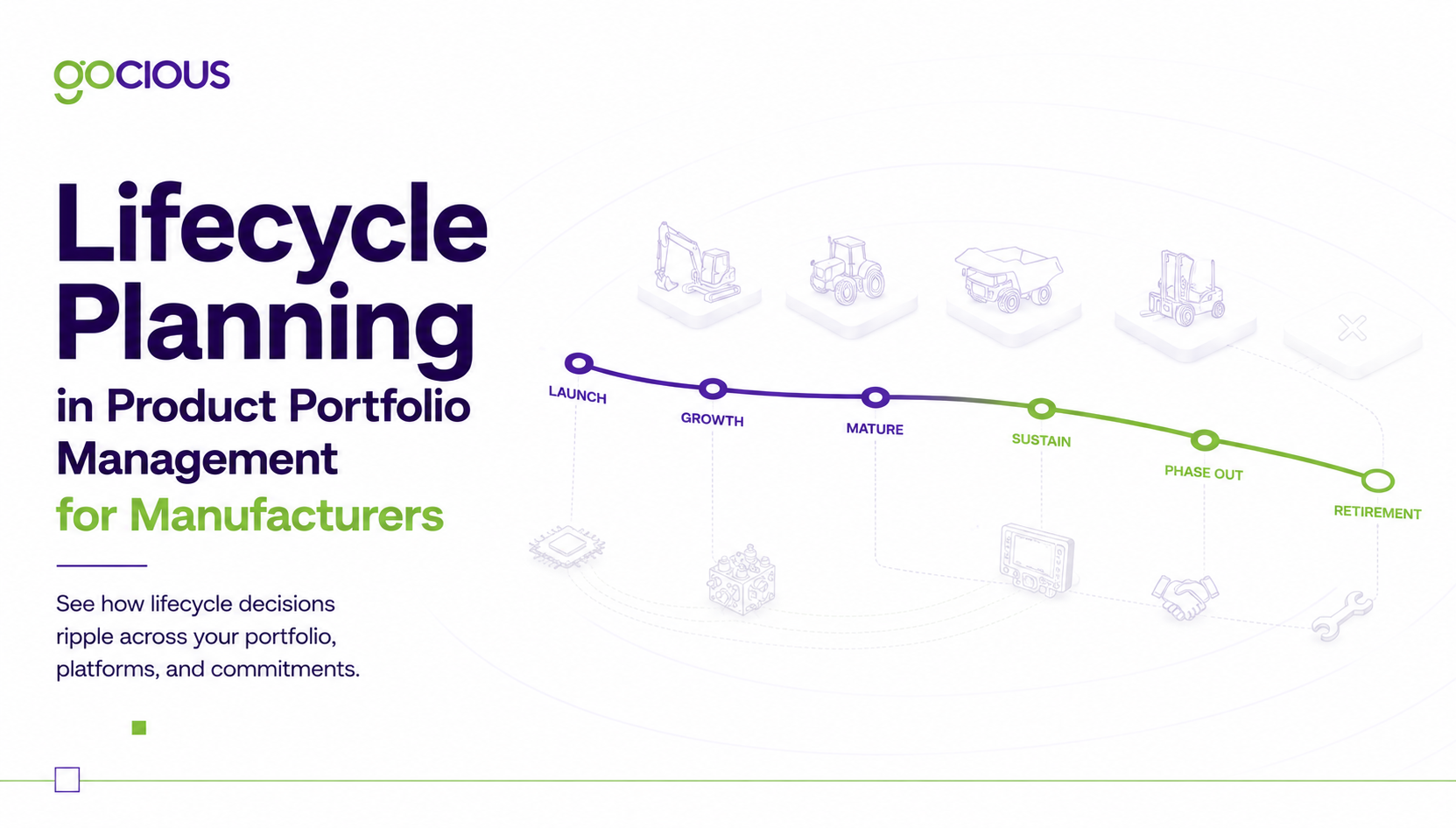
How to Sunset a Product in Manufacturing with Examples
Most manufacturers can create a product launch plan quickly, but far fewer can outline how to sunset a product with that same level of clarity. A legacy product that lingers in the portfolio consumes capital, limits focus, and increases service complexity across regions and sales channels.
How a Product Line Roadmap Drives ROI in Manufacturing
A product line roadmap gives manufacturing leaders and cross-functional teams a clear, unified view of how multiple products, platforms, and resources connect. It breaks down product silos and helps product leaders make better data-driven decisions.
For organizations operating multi-year hardware and software cycles across varied regions and regulatory environments, a roadmap provides strategic direction, helps teams make aligned decisions, and supports a consistent product development process that protects release timelines and factory operations.
How the Product Process Matrix Improves ROI in Manufacturing
The product process matrix helps manufacturing managers determine whether their product strategy supports profitable scale or limits performance. This visual representation aligns product variety and volume with the process structure that supports them. It links product characteristics to the manufacturing process used on the plant floor so leaders can evaluate how their factories handle variation, cost, and throughput.
What is a Product Mix Plus Product Mix Strategies
A manufacturer’s product mix affects margin structure, capacity utilization, product assortment, product quality, and how efficiently the company responds to customer preferences across different market segments. For organizations with multiple product lines, the company’s product mix becomes the portfolio blueprint that determines where to invest, which product lines to expand, and how to balance diverse customer needs with factory realities.
How Product Engagement Scores Drive ROI in Manufacturing
Manufacturers rely on clear, reliable indicators to understand how customers use their products, how adoption improves over time, and where product teams should focus their efforts. The product engagement score, often called PES, is one of the most valuable tools for capturing how many users engage with the product, how users interact with key features, and whether engagement trends support long-term growth.
The product engagement score measures adoption, stickiness, and expansion by combining three key metrics into a single view. This helps manufacturers evaluate user engagement with core features and understand whether users consistently return during a defined time period, such as daily, weekly, or monthly cycles.
Product Vulnerability Management: How to Assess Risk & Ultimate Checklist
Product vulnerability management has become a core leadership responsibility for manufacturers. As connected products combine hardware, embedded software, networks, and cloud services, even a single security vulnerability can pose significant risk to product performance, safety, and customer trust. Vulnerabilities can trigger recalls, exploited vulnerabilities in the field, breach events, and costly patch campaigns that disrupt roadmaps and consume resources.
Product Iteration in Manufacturing and How to Test Features
Product iteration plays a central role in modern manufacturing because it bridges strategic intent with measurable improvements. When hardware, firmware, and software intersect, organizations need an iterative process that reduces risk while supporting continuous improvement. A disciplined approach helps cross-functional teams introduce new features that align with user needs, respond to market demands, and strengthen financial performance.
Cross-Functional Teams in Manufacturing 101: A Product Leader's Guide
Cross-functional teams help manufacturing organizations align market needs, engineering realities, and factory operations within a single working model. Instead of passing requirements from product management to engineering, then to operations, and finally to the plant, cross-functional groups bring the right people together from the early concept stage to production, ramp, and long-term support.
Reduce Time to Market in Manufacturing Product Launches
Manufacturers across every major sector are under pressure to reduce time to market while still delivering reliable, compliant, and profitable products. Time to Market (TTM) represents the period between approving an initial concept and releasing the first version of a product to customers. That span covers the full product development process, including engineering, supply chain preparation, validation, and factory readiness.
Marketing Requirement Documents for Faster Product Launches
A marketing requirement document is often the first serious test of whether a manufacturing product concept deserves investment. In many organizations, this test is rushed or scattered across slide decks, emails, and spreadsheets. The result is product teams guessing which features matter, sales promising capabilities that do not exist, and capital locked in products that miss the target market.