
 By
·
18 minute read
By
·
18 minute read
Product portfolio planning is the discipline of deciding how a company will invest in, evolve, launch, maintain, and eventually retire products across a connected portfolio.
For complex manufacturers overseeing product portfolios, product portfolio planning is not just a list of product ideas or a timeline of launches. It is the planning layer that connects product lines, platforms, modules, lifecycle stages, regional requirements, investment decisions, and changing assumptions over time.
That distinction matters because manufacturing portfolios rarely move in simple straight lines.
-
A product family may depend on a shared platform.
-
A module may be reused across several generations.
-
A software release may need to align with hardware gates.
-
A regional requirement may change the economics of a global product plan.
-
A legacy product may still require service support while the next generation is being funded.
When those decisions live across spreadsheets, presentations, disconnected systems, and team-specific views, the portfolio can look aligned even while the underlying assumptions are tracking sideways. Product portfolio planning exists to keep the portfolio visible, credible, and actionable before risk becomes expensive.
In this guide, learn what product portfolio planning is, how it differs from related disciplines like PLM and roadmapping, and useful frameworks to analyze a portfolio. Let’s get started.
What Is Product Portfolio Planning?
Product portfolio planning is the structured process of managing product decisions across a group of related products, platforms, modules, and lifecycle investments. Overall, portfolio planning helps leaders decide what to fund, what to delay, what to simplify, what to sunset, and how changes in one part of the portfolio affect the rest of the business.

In a simple software company, planning may focus mostly on features, releases, market segments, and capacity.
But in complex manufacturing, the planning problem is broader. Teams have to account for long lifecycles, physical product constraints, shared modules, supply chain exposure, regulatory timing, hardware and software coordination, service obligations, and region-specific variation.
A useful product portfolio plan helps teams answer questions such as:
-
Which products, platforms, modules, and product lines are active, planned, changing, or being retired?
-
Where are investment commitments tied to assumptions that may have changed?
-
Which products share dependencies that could create broader timing, cost, or margin exposure?
-
How do product line plans connect to lifecycle stages, regional needs, and business priorities?
-
What tradeoffs should leadership review before direction hardens or capital becomes harder to reallocate?
-
How should the mix evolve as markets, costs, customer needs, and technology assumptions change?
Ultimately, it looks across the entire portfolio, from product families and lines to platforms and lifecycle stages, rather than at any single product in isolation.
Primary Goal of Product Portfolio Planning
The goal is not perfect prediction, but a trusted portfolio view that helps teams see what exists, what is planned, what changed, and what those changes affect while there is still room to act.
Done well, portfolio planning helps product leaders answer a deceptively simple question:
Given limited capital, capacity, and attention, which products deserve them, and which do not?
Done poorly, a portfolio grows by accretion. Every individual product decision looks reasonable, yet the collection becomes harder to defend.
Why Product Portfolio Planning Matters
Portfolio leaders in complex environments are usually trying to grow revenue, protect capital discipline, serve global markets, navigate demand volatility, coordinate hardware and software development, and support long-lived products at the same time. That combination makes portfolio planning harder than ordinary product planning.
A decision that looks reasonable inside one product line can create problems somewhere else. For example:
-
A shared subsystem slips.
-
A regional variant adds cost.
-
A software assumption changes after a hardware gate is already set.
-
A legacy product stays in market longer than expected and consumes support capacity.
None of those changes may look dramatic alone, but together they can weaken portfolio credibility. This is why product portfolio planning matters most when complexity is distributed. Risk often hides between plans, not inside a single plan.
If the portfolio view cannot show how products, modules, platforms, lifecycle assumptions, and investment decisions connect, leaders may discover the real exposure only after the cost of change has gone up.
Who Owns Product Portfolio Planning?
Product portfolio planning usually touches several roles, and each role cares about a different part of the problem.
-
Portfolio executives care about whether the investment mix still makes sense. They need to know which bets are drifting, where downside exposure is building, and how to defend or reallocate capital before credibility breaks.
-
Product line leaders care about whether one major product family or platform remains coherent and defensible. They need to understand variant growth, hardware-software alignment, readiness risk, and which opportunities the product line can realistically absorb.
-
Portfolio operations teams care about whether leadership can trust the portfolio view. They collect updates, reconcile conflicts, track changes, and protect the credibility of the planning picture in executive reviews.
-
Product managers care about whether the current product plan remains believable as reality changes. They need to track dependencies, lifecycle effects, integration risk, and downstream impact without stitching together the answer manually every time something moves.
A strong product portfolio planning process respects those differences. It should not flatten every persona into the same generic buyer. The executive deciding capital tradeoffs and the product manager keeping a launch plan current both need portfolio visibility, but they use it to answer different questions.
Product Portfolio Planning vs. Related Disciplines
Product portfolio planning often gets mixed together with product portfolio management, roadmapping, PLM, and project management. The overlap is understandable, but the distinctions matter.
When strategic portfolio questions are forced into tools built for a different job, teams may get an answer that is too narrow, too late, or too execution-focused.
Product Portfolio Planning vs. Product Portfolio Management
Product portfolio management is the broader discipline of governing, measuring, and optimizing a set of products over time. It often includes performance management, investment governance, prioritization, resource tradeoffs, and lifecycle decisions.
Product portfolio planning is the forward-looking planning layer within that discipline. It focuses on how the portfolio should evolve, what assumptions support the plan, where dependencies exist, and how decisions need to change as reality changes.
For manufacturers, planning is especially important because many decisions become expensive to unwind. Once a platform, major module, or product generation is funded, the organization cannot casually reverse course without cost, delay, or credibility loss.
A strong portfolio planning process helps leaders see the portfolio as a connected system before decisions harden.
Product Portfolio Planning vs. Product Roadmapping
A product roadmap is one expression of a product or portfolio plan. Product portfolio planning is the decision discipline behind it.
Roadmapping helps teams communicate direction. Product portfolio planning helps teams decide whether that direction still makes sense as assumptions move.
This is important because the word roadmap is often used too narrowly. In complex manufacturing, a roadmap should not be treated as a simple release timeline or a list of features. It can also show lifecycle movement, platform evolution, module reuse, regional timing, product line strategy, investment direction, and dependency exposure.
That is why manufacturers often need product roadmap software that supports strategic planning across product lines, not only task-level delivery tracking.
Product Portfolio Planning vs. PLM
Product portfolio planning is not the same as product lifecycle management, or PLM.
PLM systems are typically designed for:
-
engineering control
-
product records
-
technical data
-
design change
-
release processes
-
lifecycle documentation
They are essential in many manufacturing environments, but they are not usually built to answer strategic portfolio questions.
Product Portfolio Planning Sits Above the Engineering Record
Furthermore, PLM can help control the product record. Meanwhile, product portfolio planning helps product and portfolio teams understand the portfolio decisions they need to make as that record, the market, and the business context change.
Product portfolio planning sits above the engineering record. It does not replace PLM, execution systems, or detailed engineering workflows. Instead, it gives product and portfolio teams a strategic planning view that connects decisions across products, modules, platforms, lifecycle stages, and business assumptions.
Product Portfolio Planning vs. Project Management
Product portfolio planning is also not project management.
Project management is concerned with executing approved work: tasks, owners, deadlines, status, milestones, and delivery coordination.
Meanwhile, product portfolio planning is concerned with deciding whether the right work is moving forward, how different product decisions interact, and where the portfolio needs attention before execution risk becomes expensive.
A project tracker can tell a team whether work is on schedule. It may not show whether a shared module delay affects five product lines, whether a regional requirement changes the business case, or whether a funded product family is drifting away from the original strategic rationale.
Manufacturers often have plenty of execution tools. The missing layer is usually a planning layer that offers a trusted portfolio visibility: one connected planning view that helps teams align around what is changing, why it matters, and what decisions need to happen next.
What Information Belongs in a Product Portfolio Plan?
The right inputs depend on the manufacturer, but a strong product portfolio plan usually combines strategic, product, lifecycle, dependency, and business context. The point is not to collect data for its own sake. The point is to give teams enough connected information to understand implications before decisions become expensive.
1. Portfolio Structure
Portfolio structure includes product families, product lines, platforms, modules, subsystems, configurations, variants, regions, and major customer or market segments. This structure helps teams understand what the portfolio actually contains and how its pieces relate to one another.
2. Lifecycle State
Lifecycle state shows where each product, platform, module, or capability sits over time. For manufacturers, this can include concept, development, launch, active sale, service, maintenance, replacement, sunset, end-of-sale, and end-of-support.
Strong lifecycle planning matters because products in different states create different obligations and constraints.
3. Roadmap Direction
Roadmap direction shows where the product or portfolio is headed. In this context, roadmap should be understood broadly. It can include release timing, product generation plans, feature or module introductions, platform migration, regional rollout, software alignment, replacement strategy, and lifecycle transitions.
4. Dependencies
Dependencies show where products rely on shared modules, platforms, suppliers, software releases, manufacturing readiness, regulatory approvals, testing capacity, service resources, or other product lines. These are the connections that often turn a local change into a portfolio-level issue.
5. Planning Assumptions
Planning assumptions explain why the current plan makes sense. They may include expected demand, cost targets, margin expectations, capacity assumptions, launch constraints, regional requirements, customer commitments, or technology readiness. When assumptions move, the portfolio plan should make the impact visible.
6. Investment and Business Context
Investment context helps leaders understand what is already committed, what is still flexible, and what is at risk. This can include capital allocation, expected return, revenue exposure, margin exposure, resource demand, strategic priority, and the cost of delay or complexity.
7. Decision Status
Decision status shows what has been approved, what is proposed, what is under review, what is blocked, and what needs escalation. A portfolio plan should make it clear whether a topic is informational or whether leadership needs to choose between options.
6 Core Elements of Product Portfolio Planning
A strong product portfolio planning process usually includes several connected elements. The exact structure will vary by company, but the planning layer should make these areas visible enough for teams to discuss decisions, not just report status.
1. A Trusted Portfolio View
The first requirement is a shared view of the portfolio that people trust. In many organizations, the problem is not a lack of effort. Teams are already building spreadsheets, slides, dashboards, and review materials. The problem is that those views are manually assembled, updated inconsistently, and often built for the next meeting rather than maintained as a living system.
When teams work from different versions of the truth, portfolio reviews become debates about data instead of decisions. A trusted view, such as the one supported by product portfolio planning software, gives product leaders a credible starting point.
2. Lifecycle Visibility
Manufacturing products do not disappear when the next launch begins. They remain in market, require service, carry support obligations, and overlap with new generations. Product portfolio planning needs to show lifecycle states across products, modules, and platforms so teams can see what is launching, what is changing, what is being maintained, and what needs to be retired.
3. Dependency and Shared Module Awareness
Shared modules, platforms, subsystems, and software components can create efficiency, but they also spread exposure. A change that looks small in one plan can cascade across several products, regions, launches, or service commitments.
For manufacturers using common architectures, product portfolio planning should make shared module risk and dependencies visible before they turn into launch delays, margin pressure, or late executive review surprises.
4. Decision Rationale and Planning Assumptions
A portfolio plan should preserve more than dates. It should make the logic behind decisions visible: what assumptions supported the investment, what constraints were known, what tradeoffs were accepted, and what would cause leadership to reconsider.
Without that context, teams may keep executing a plan that no longer reflects the conditions under which it was approved.
5. Prioritization and Tradeoff Clarity
Product portfolio planning helps teams compare unlike decisions: maintain a legacy product, accelerate a platform refresh, fund a new product family, simplify regional variation, delay a module, or shift investment to a more defensible opportunity. These are not just task-level choices. They are portfolio tradeoffs.
As teams mature, a trusted portfolio view can also become the foundation for stronger scenario planning, because leaders can compare alternatives without rebuilding the entire story from scratch.
6. A Way to Keep the Plan Current
A static annual portfolio plan is rarely enough in complex manufacturing. Cost assumptions move. Supply constraints change. Hardware and software timelines drift. Regional needs evolve. Products stay in market longer than expected.
This is why many manufacturers move toward continuous product portfolio planning. They need the planning view to stay credible as reality changes.
Why Product Portfolio Planning Breaks Down
Product portfolio planning usually breaks down when the organization manages a connected portfolio through disconnected planning artifacts.
The most common failure patterns are practical, not theoretical:
-
Cadence outruns data. Leadership needs updates faster than teams can reconcile inputs, so the official view lags reality.
-
Risk hides in shared modules. Each product plan looks reasonable alone, but the shared dependency creates broader exposure.
-
Replanning work becomes invisible. Teams repeatedly rebuild decks, spreadsheets, and narratives while leadership sees only the refreshed output.
-
Presentation views become the decision layer. Teams revert to slides because they need speed and clarity, even when the underlying data is fragile.
-
Variant creep weakens product coherence. Small additions accumulate until the product line becomes harder to build, test, launch, support, and defend.
-
Tradeoff questions stay manual. Teams can discuss alternatives, but comparing them requires side analyses and rebuilt planning views.
These are the reasons product portfolio planning breaks down in manufacturing even when teams are working hard and using established systems. The issue is not usually a lack of discipline. It is that the portfolio is changing faster than the planning layer can keep up.
A 6-Step Product Portfolio Planning Framework
A useful product portfolio planning process should help teams move from scattered product information to credible decisions. This framework is intentionally practical. It does not assume a manufacturer can replace every system, rebuild every workflow, or reach perfect analytical maturity before planning improves.
Step 1: Define the Planning Object
In a complex manufacturing environment, the planning object is rarely just one product. It may be a product family, product line, platform, module set, regional portfolio, technology roadmap, or investment group. Without a clear planning object, teams end up mixing product-level decisions, portfolio-level investment questions, and execution updates in the same conversation.
Step 2: Map the Portfolio Structure
Teams need to see how products relate to platforms, modules, subsystems, software, lifecycle states, regions, and customer or market segments. This is where many planning processes break down.
A product can look healthy in isolation while the shared platform underneath it is overloaded, outdated, delayed, or tied to assumptions that have changed.
Step 3: Connect Decisions to Assumptions
Every major product or portfolio decision rests on assumptions about demand, margin, launch timing, engineering capacity, regional need, regulatory timing, support burden, or reuse. When those assumptions are not visible, teams may keep defending an old decision without realizing the logic behind it has changed.
Step 4: Identify Decision Points
Not every update deserves executive attention. The planning layer should help teams distinguish normal movement from decisions that require tradeoff, escalation, investment, simplification, delay, or sunset. Otherwise, portfolio reviews become long status meetings where the most important choices are buried.
Step 5: Create a Review Rhythm
Build a review rhythm that matches the pace of change. Some portfolio questions belong in annual strategy planning.
Others belong in quarterly portfolio reviews, monthly product line reviews, or ad hoc decision forums when a major assumption moves. The key is to keep the portfolio view current enough that reviews focus on what changed and what needs to happen next.
Step 6: Preserve Decision History
Portfolio planning is not only about reaching the next decision. It is about maintaining enough continuity that future teams can understand why a decision was made, what changed after approval, and whether the current plan still deserves confidence.
Product Portfolio Planning in Practice: Portfolio Drift Example
Imagine a manufacturer approves a three-year plan for a new equipment platform.

At the time of approval, the business case assumes a shared module will support three product families, a software capability will be ready by the second release, and two regions will adopt the platform with only minor variation.
Six months later, the module team adjusts timing because of a supplier constraint.
-
The software capability remains directionally planned but has not reached the confidence level the hardware team expected.
-
One region adds a regulatory requirement that changes the launch sequence.
-
Another product family asks for an exception that seems reasonable on its own.
Nothing looks broken in a single status update. Each team can explain its local change. But across the portfolio, the original logic is drifting. The shared module no longer supports the same timing, the software assumption is weaker, and regional variation has changed the economics of the original plan.
This is the kind of situation product portfolio planning is meant to catch.
The value is not that the plan never changes. Plans should change when reality changes. The real value is seeing that the approved portfolio is becoming a different portfolio before leadership discovers the gap in a review where options are already narrower.
Product Portfolio Planning Maturity: From Visibility to Rigor
Most manufacturers should not begin by trying to create a perfect planning model. The more practical path is to start with the first problem that blocks better decisions: visibility. Once teams can trust the portfolio view, they can add more planning rigor over time.
Stage 1: Fragmented Views
Planning information lives across spreadsheets, slides, disconnected systems, and team-specific artifacts. People may know the portfolio well, but the data is not consistently visible. Reviews often spend too much time reconciling inputs before decisions can begin.
Stage 2: Shared Portfolio Visibility
The organization creates a common portfolio view that shows products, product lines, platforms, lifecycle states, and key planning information in one place. This does not solve every planning problem, but it creates a credible foundation for alignment.
Stage 3: Connected Lifecycle and Dependency Planning
The planning view begins to show how products, modules, subsystems, software, regions, and lifecycle states connect. Teams can see where changes may create downstream impact instead of discovering that impact manually after the fact.
Stage 4: Tradeoff and Assumption Management
The organization can compare options with more confidence because decision rationale, assumptions, dependencies, and portfolio implications are visible. Leaders can discuss what to fund, delay, simplify, or stop without rebuilding the story from scratch.
Stage 5: Continuous Portfolio Planning
At the highest maturity level, portfolio planning becomes a living decision layer. Teams can keep the portfolio view current as assumptions change, surface risk earlier, and focus reviews on tradeoffs and action rather than reconciliation.
Product Portfolio Planning by Time Horizon
Manufacturing portfolio planning becomes clearer when teams separate decisions by time horizon.
A near-term launch decision, a mid-term product line decision, and a long-range platform investment may all appear in the same portfolio review, but they do not carry the same certainty, flexibility, or risk.
Near-Term Planning: Protect Launch and Readiness Confidence
Near-term planning focuses on work that is already moving toward launch, release, production, or customer commitment. The questions are practical: what changed, what is at risk, what dependencies moved, and what downstream teams need to know now?
For product managers and product operations teams, this horizon is where manual replanning can quietly become the job. Dates shift, dependencies move, readiness risks appear, and teams need a current view that keeps the product plan believable across functions.
Mid-Term Planning: Keep Product Lines Coherent
Mid-term planning focuses on product line direction, platform evolution, module reuse, regional sequencing, and capability timing. The question is not only whether individual projects are on track. The question is whether the product line still holds together as customer needs, lifecycle obligations, hardware timing, software assumptions, and capacity constraints evolve.
This is where variant creep, shared-module risk, and hardware-software drift often become visible. A product line can continue moving forward while becoming harder to build, test, support, or defend.
Long-Range Planning: Defend Strategic Investment Choices
Long-range planning focuses on major bets that may shape the business for years: platform investments, next-generation products, enabling technologies, regional expansion, replacement strategies, and product families that require sustained capital commitment.
.jpg?width=2525&height=1536&name=medical%20equipment%20manufacturing%20(2).jpg)
At this horizon, the planning view should help executives understand whether the investment mix still reflects the strategy leadership intended to fund. That is especially important for leaders responsible for managing product portfolios in complex manufacturing.
Common Product Portfolio Planning Mistakes
Many planning problems come from reasonable habits that stop working as complexity grows.
These mistakes are especially common when a manufacturer is scaling products, platforms, modules, regions, or software-enabled offerings faster than its planning process can adapt.
Mistake 1: Treating the Portfolio as a Collection of Independent Products
When each product plan is reviewed separately, leaders may miss the dependencies that create portfolio-level exposure. The plan can look healthy product by product while shared modules, lifecycle conflicts, capacity limits, or regional requirements are quietly accumulating risk.
Mistake 2: Using Roadmaps Only as Timeline Artifacts
A timeline is useful, but it is not enough. Manufacturers need roadmaps that communicate product direction, lifecycle movement, platform evolution, module reuse, regional rollout, and confidence levels. If the roadmap is only a date view, it will not carry enough strategic context.
Mistake 3: Forcing Strategic Questions Into Project Tools
Project tools are useful for tracking execution, but they are not designed to show whether the product portfolio still reflects the strategy leadership approved. When teams use delivery tools to answer portfolio questions, the answer is often too task-focused and too late.
Mistake 4: Assuming PLM Solves Portfolio Visibility
PLM can be essential for product data and engineering control, but strategic portfolio planning requires a different view. Leaders need to understand investment decisions, lifecycle assumptions, dependencies, product line direction, and change impact above the level of detailed engineering records.
Mistake 5: Letting Slides Become the Only Decision Layer
Slides are often necessary because executives need clarity and speed. The problem appears when the presentation becomes the only place where the portfolio story exists.
If the source information is fragmented, every review cycle requires manual rebuilding, and the risk of stale or conflicting views increases.
Mistake 6: Losing the Rationale Behind Decisions
A decision can be right when approved and wrong later if the assumptions behind it change. If the planning process does not preserve rationale, teams may continue defending a plan that no longer has the same strategic logic.
How Product Portfolio Planning Supports Better Decisions
Product portfolio planning is ultimately valuable because it improves decision quality.
-
Timing improves because teams can identify exposure earlier, while there are still options to adjust scope, sequence work, change timing, simplify variation, or protect higher-priority investments.
-
Alignment improves because teams share one credible portfolio view instead of debating which version is current.
-
Accountability improves because decision rationale, assumptions, and dependencies remain visible after approval.
-
Focus improves because teams can separate routine updates from decisions that truly affect investment, timing, lifecycle, risk, or product coherence.
Ultimately, it helps teams see the context around a choice before they commit too much capital, capacity, credibility, or customer expectation to a path that may no longer hold.
Product Portfolio Planning Metrics and Signals to Watch
Metrics can help, but only if they support the planning conversation instead of replacing it. In complex portfolios, the most useful measures are more than performance scores and product engagement scores. They are signals that show whether the portfolio is becoming harder to trust, harder to execute, or harder to defend.
-
Investment exposure: which bets already have capital committed, which assumptions support those bets, and where downside exposure is growing.
-
Coherence signals: variant growth, platform complexity, module reuse, readiness risk, and hardware-software alignment.
-
Credibility signals: how often updates arrive late, how often review materials need to be rebuilt, how many conflicting versions of the truth exist, and where leadership repeatedly asks why the picture changed.
-
Change-impact signals: what changed since the last review, which dependencies moved, what downstream plans are affected, and where manual replanning is consuming time.
The strongest product portfolio planning metrics are not just retrospective. They help teams see where the plan is losing credibility before the business feels the full cost.
Where Product Portfolio Planning Software Fits
Product portfolio planning software should not simply digitize the same disconnected reporting process. It should help teams maintain a connected planning layer that stays useful between review cycles.
For manufacturers in complex environments, that means the software should help teams see portfolio structure, roadmap direction, lifecycle movement, shared dependencies, planning assumptions, and change impact in one place.
It should support the way manufacturers actually operate: across long lifecycles, regional variation, shared modules, hardware and software coordination, and investment decisions that carry consequences for years.
Which Platform Should You Choose?
Gocious is built as a strategic product portfolio planning platform for complex manufacturers, giving teams a trusted view of the portfolio so they can see change earlier, align faster, and make better decisions before risk becomes expensive. See how Gocious supports product portfolio planning.
Gocious is not a project tracker, a dev-first roadmapping tool, or a PLM replacement. It sits above execution and engineering systems to help product and portfolio teams maintain and communicate better decisions over time.
What to Look for in Product Portfolio Planning Software
The right product portfolio planning software for a complex manufacturer should reflect how manufacturing portfolios actually work. A generic roadmap tool may show dates and initiatives, but it may not represent the product structure, lifecycle burden, shared modules, and dependency risk that make manufacturing planning difficult.
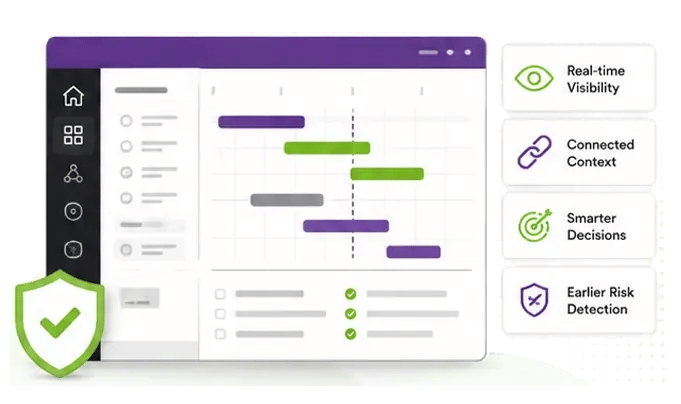
Look for:
-
Portfolio visibility. The software should help teams see products, product lines, platforms, modules, lifecycle stages, planning assumptions, and roadmap direction in a shared environment.
-
Lifecycle and dependency awareness. Manufacturers need to understand what is launching, changing, maintained, deprecated, or retired, and how those lifecycle states affect other products or commitments.
-
Planning flexibility above execution detail. The tool should sit above project management and engineering systems, not try to replace every detailed workflow.
-
Decision communication. Portfolio planning is not useful if leaders cannot understand the story: what changed, what it affects, where risk is building, and which tradeoffs need attention.
-
Phased adoption path. Many manufacturers need to start with one trusted portfolio view before they can mature into more advanced planning discipline.
For examples of how manufacturers approach this kind of planning in practice, explore the Gocious case studies.
See Your Portfolio Clearly, Before Risk Becomes Expensive
If your portfolio view is getting harder to trust as products, modules, platforms, and lifecycle assumptions change, book a custom demo with Gocious. See how a connected product portfolio planning layer helps your team spot risk earlier, align faster, and make better decisions while there is still room to adjust.
Frequently Asked Questions